
Understanding how exhaust systems work helps you look beyond pipe size and exhaust sound. From the exhaust valve to the tailpipe, each component plays a role in moving combustion gases, controlling emissions and noise, and influencing engine performance.
Heat travels through that entire system. Inside the pipes, exhaust temperature affects gas density and flow. Outside them, radiant heat can reach wiring, hoses, starters and the passenger compartment. A well-designed exhaust system accounts for both.
Let’s follow the exhaust from the engine to the tailpipe, then look at how Heatshield Products insulation and thermal barriers help control the heat along the way.
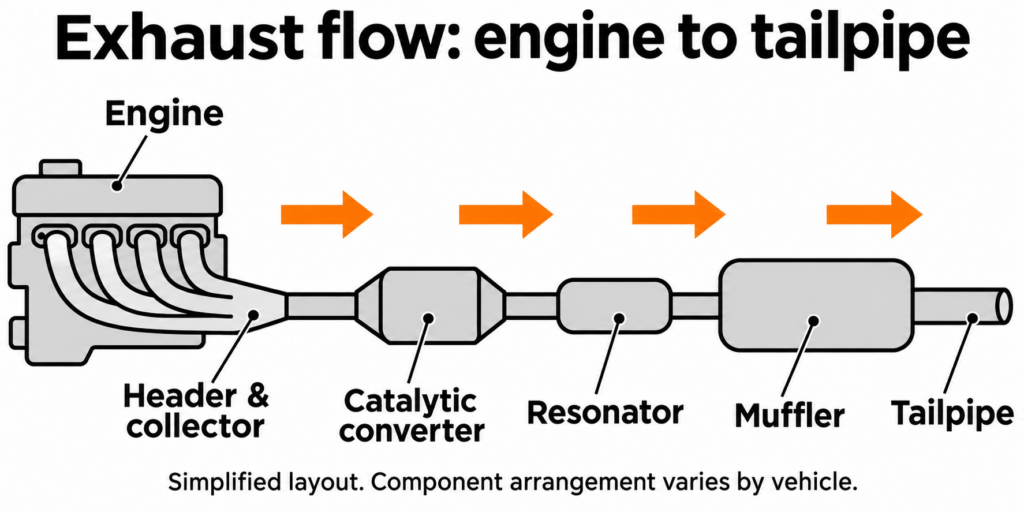
How Exhaust Systems Work at the Engine
The process begins when the exhaust valve opens near the end of the power stroke. Pressure inside the cylinder starts pushing combustion gases into the exhaust port. As the piston rises during the exhaust stroke, it pushes out more of the remaining gases.
From there, the gases enter an exhaust manifold or header. A manifold collects exhaust from several cylinders into a common outlet. Headers use individual primary tubes that join at a collector.
Each cylinder releases its exhaust at a different point in the firing sequence, so the flow arrives in pulses. Those pulses create pressure waves that help explain why header design can affect engine performance.
Exhaust Scavenging: Why Header Design Matters
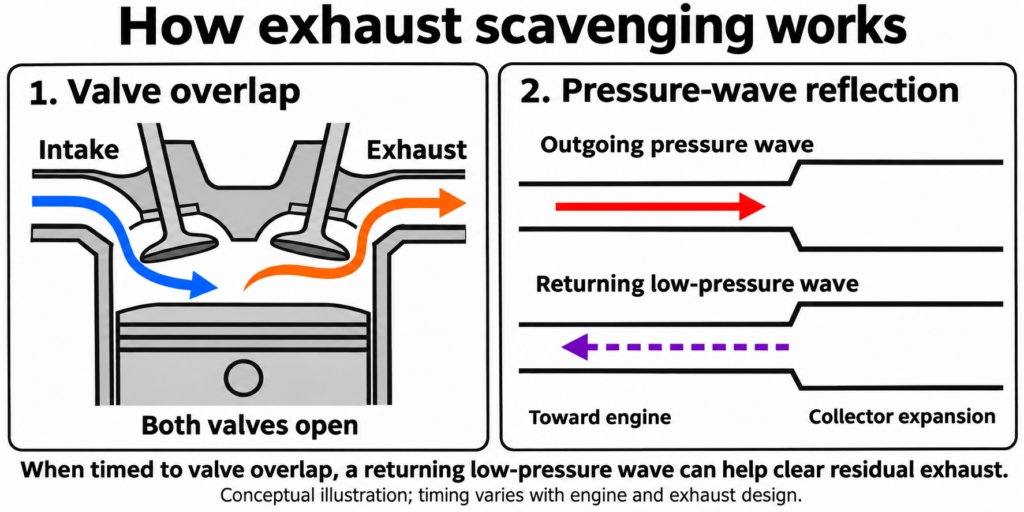
Exhaust scavenging is the process of clearing residual combustion gases from a cylinder to make room for the next intake charge. Moving exhaust gases help this process, but pressure waves also play an important role.
Gas flow and pressure-wave travel are different. Exhaust gases move toward the outlet, while pressure waves travel through the gases and reflect at changes in pipe area. For example, a pressure wave reaching the larger area of a collector can send a low-pressure wave back toward the engine.
If that returning wave reaches the exhaust valve at the right time, it helps draw remaining gases out of the cylinder. This can assist cylinder filling during valve overlap, the brief period when the intake and exhaust valves are both open.
Header length, tube diameter, collector design and valve timing all influence this effect. These features work together across the engine’s RPM range, which is why choosing headers involves more than selecting the largest tubes available.
How Exhaust Systems Work: Collectors and Crossovers
Collectors bring the individual header tubes together and direct their exhaust into the rest of the system. Their shape and dimensions influence both flow and the pressure-wave behavior described above.
On many V8 vehicles with dual exhaust, an H-pipe or X-pipe also connects the two sides of the system. An H-pipe uses a passage between the pipes, while an X-pipe brings the flow paths together through a crossover.
These connections affect how the exhaust pulses interact and help shape the system’s sound. Their performance effects depend on the engine, pipe size, crossover location and the rest of the exhaust. The goal is to choose a layout that works with the complete combination.
Exhaust Pipes and Catalytic Converters
The connecting pipes carry gases between the headers, emissions equipment, sound-control components and tailpipe. Pipe diameter, bends and restrictions all affect resistance to flow. A crushed pipe or damaged component can disrupt an otherwise well-designed system.
On vehicles equipped with catalytic converters, exhaust gases pass through a catalyst that promotes reactions to reduce harmful emissions. The converter needs heat to operate effectively, and those reactions can generate additional heat.
As a result, the area around a converter can expose nearby floor panels and components to substantial radiant heat. Factory shielding and clearances help control that exposure. When adding heat protection, choose materials and installation methods intended for the converter or the surrounding surface you want to protect.
The exact arrangement varies by vehicle, but every section must provide room for exhaust flow, movement and thermal expansion.
How Exhaust Systems Control Sound
Farther along the system, resonators and mufflers control the sound produced by the exhaust pulses. A resonator typically targets particular sound frequencies, while a muffler reduces noise across a broader range. Together, they help create the exhaust tone you hear inside and outside the vehicle.
Their internal designs also influence flow resistance. A useful exhaust upgrade balances sound and flow with the engine’s needs; volume alone tells you little about its performance.
Finally, the tailpipe carries exhaust gases to the outlet. Its routing and position direct hot gases away from the vehicle and its occupants. By this point, the exhaust has passed through components that influence flow, emissions and sound—but it still carries heat.
How Exhaust Systems Work: The Role of Heat
Exhaust gases transfer heat to the pipes and other components as they travel through the system. Those hot surfaces then release heat into the engine compartment and beneath the vehicle. This is how an exhaust pipe can contribute to a hot floor or expose a nearby starter, hose or wiring harness to excessive heat.
Temperature also affects conditions inside the exhaust. At the same pressure, hotter gas is less dense. For the same mass flow through the same pipe area, lower-density gas moves faster.
Retaining heat can therefore help maintain exhaust gas velocity. However, the flow pulses with each exhaust event, and its pressure and temperature change with engine load and RPM. The performance benefit depends on how heat retention works with the engine and exhaust design.
Insulation addresses both sides of this relationship: it keeps more heat within the exhaust and reduces heat escaping toward surrounding components. Our exhaust insulation benefits guide explores heat retention in more detail.
Controlling Exhaust Heat with Heatshield Products
Once you understand the exhaust layout, choosing heat protection becomes more straightforward. Start by identifying the heat source and the part or surface affected by it.
A header near a starter presents a different problem from an exhaust pipe beneath the driver’s floor. In some cases, insulating the exhaust is the best approach. In others, a barrier on the nearby surface provides a more practical solution. You can also combine the two.
Headers and Manifolds
Headers and manifolds concentrate heat close to the engine, where space around wiring, hoses and other components can be limited. Insulating this area helps reduce radiant heat exposure while retaining more heat in the exhaust.
Lava Exhaust Wrap follows the contours of individual tubes. Header Armor provides another approach, shielding the outside of a header or manifold without wrapping each primary tube individually.
Choose between them based on operating temperature, available clearance and the header manufacturer’s installation requirements.
Exhaust Pipes and Mufflers
Under the vehicle, pipes and mufflers can radiate heat toward the floor, fuel lines and other nearby components. Heatshield Armor insulates these exhaust surfaces to help reduce that exposure.
Pipe Armor kits use Heatshield Armor material sized for specific pipe diameters and lengths. This makes them a practical option for targeting a section of exhaust beneath a seat or near a heat-sensitive component. Compare sizes and current pricing for Heatshield Armor Pipe Kits at Summit Racing.
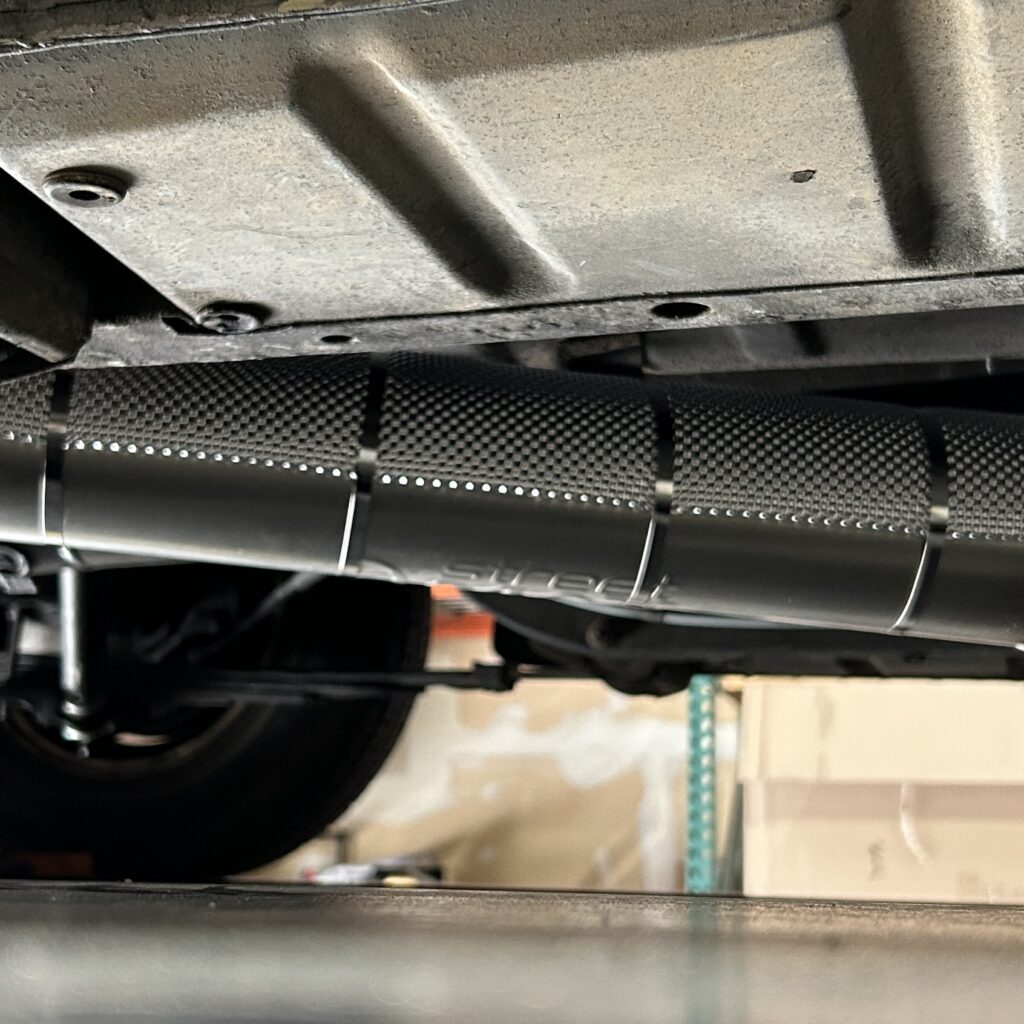
Installation methods differ between exhaust wrap and Heatshield Armor. Follow the instructions for your product, including the required uncovered strip along the pipe when installing Armor.
Our Jeep Pipe Armor installation and test shows how we addressed exhaust heat beneath a vehicle using this approach.
Floorpans, Firewalls and Transmission Tunnels
Sometimes the most accessible place to control heat is the surface receiving it. Sticky Shield attaches to surfaces such as floorpans, firewalls and transmission tunnels to help block radiant heat from nearby exhaust components.
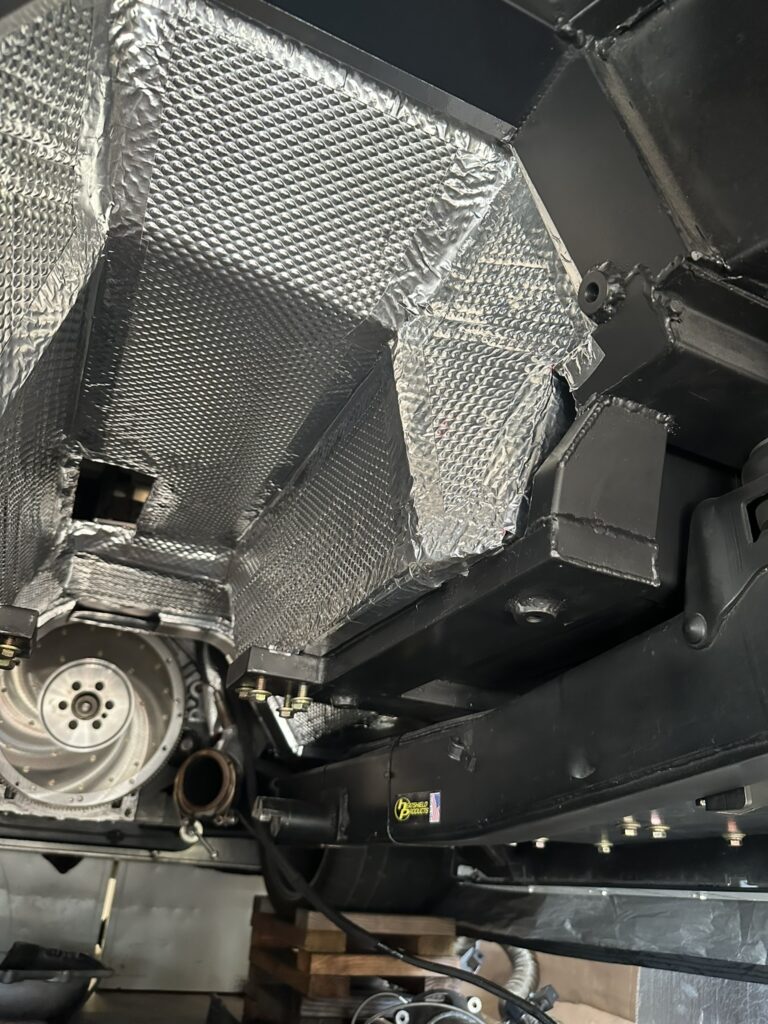
Install the barrier on the side facing the heat source, with the specified air gap between the shield and the exhaust. Proper surface preparation helps the adhesive bond securely.
For a hot-floor problem, these methods can work together. Heatshield Armor reduces heat escaping from the pipe, while Sticky Shield on the underside of the floor helps limit heat entering the passenger compartment.
How to Measure the Improvement
Choose measurements that match the problem you want to solve. A cooler floor, a protected starter and an increase in horsepower require different checks.
- Interior comfort: Compare floor or cabin temperatures under similar driving and weather conditions.
- Component protection: Measure the temperature of the affected part before and after installation.
- Engine performance: Compare torque and horsepower through repeatable testing across the operating range.
Infrared thermometers and thermal cameras measure surface temperatures. A reading from the outside of insulation does not reveal the temperature of the pipe or gases beneath it. Surface finish and instrument settings also affect the readings, so consistent measurement methods matter.
For heat-protection work, the most useful result is often the temperature change at the floor or component you wanted to protect.
Understanding how exhaust systems work helps you choose upgrades with a clear purpose. Match the exhaust design to the engine, identify where heat creates problems, and use Heatshield Products insulation and barriers to address those areas. The result is an exhaust system that supports your performance goals while helping protect the rest of the vehicle.