Exhaust insulation benefits include reduced radiant heat and better control of heat around nearby components. On turbocharged engines, insulation also helps retain exhaust energy before and within the turbine. Exhaust wraps and shields can limit heat reaching wiring, hoses and the passenger compartment. Performance gains depend on the engine, exhaust design and operating conditions.
Follow along as we break down the benefits of keeping more heat in your exhaust system.
Exhaust Insulation Benefits for Turbocharged Engines
On turbocharged applications, insulating the “hot side” of the turbocharger and keeping more heat in helps in multiple ways.
Turbo Shield Benefits
-
Reduces radiant heat from the turbine housing
-
Helps retain exhaust energy within the turbine
-
Can improve turbo response, depending on the setup
-
Helps protect nearby components from heat exposure
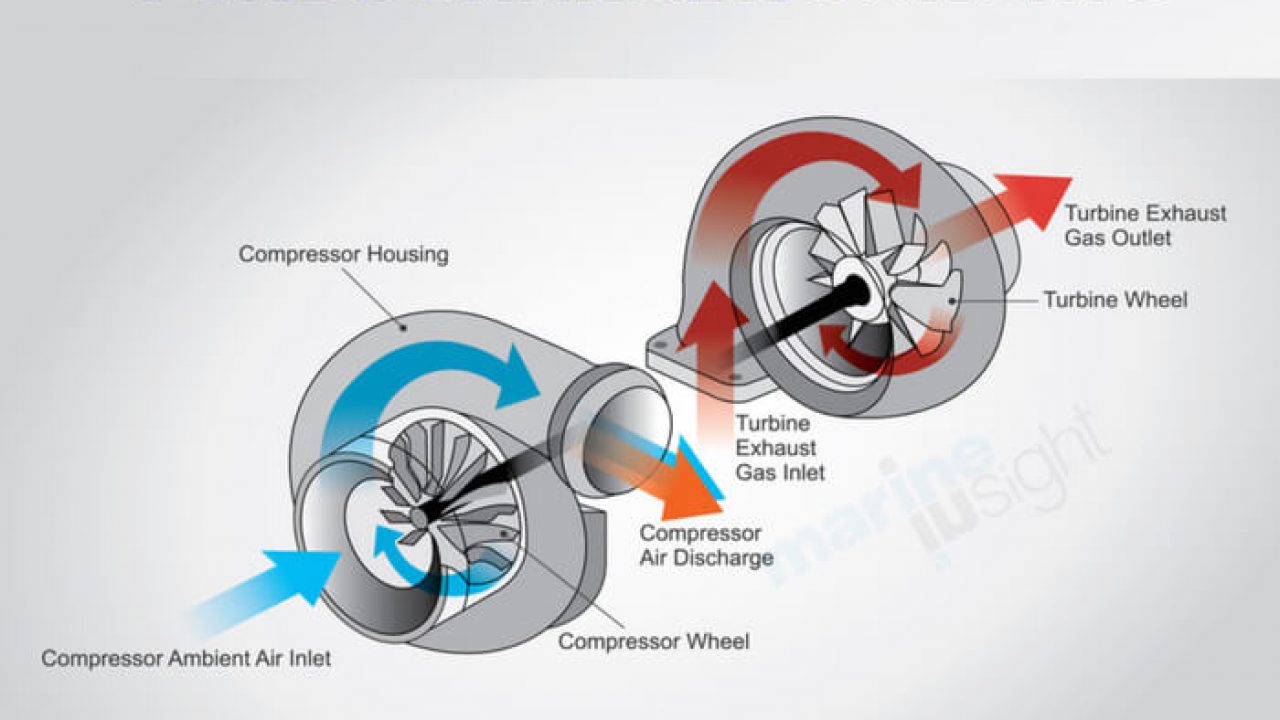
A turbocharger uses exhaust gas energy to drive a turbine connected to a compressor. The compressor supplies more air to the engine, allowing it to burn more fuel and produce more power. Unlike a belt-driven supercharger, a conventional turbo does not take drive power directly from the crankshaft. However, the turbine creates exhaust backpressure, so turbocharging is not free of pumping losses.
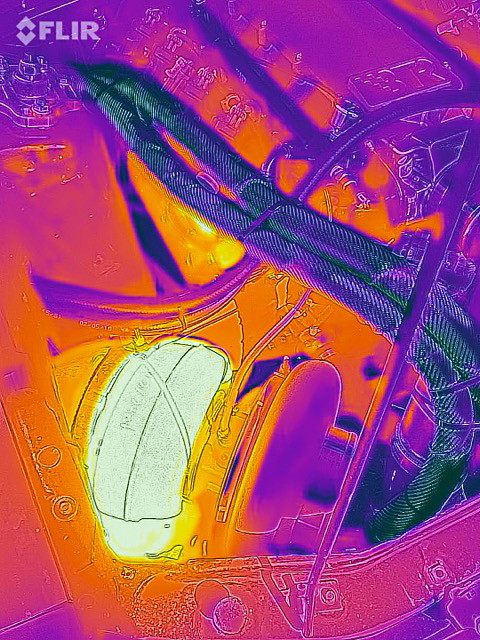
ABOVE: This thermal image shows the exposed turbine housing and surrounding components. The brighter areas indicate higher apparent surface temperatures on the displayed scale. The image illustrates a source of underhood radiant heat; it does not measure exhaust gas temperature or turbocharger power.
How Heat Retention Supports Turbo Operation
A turbo shield limits heat loss from the turbine housing to the engine compartment. Retaining that energy can support turbo response while reducing heat exposure to nearby parts.
However, exhaust temperature alone does not determine pressure, gas velocity or boost. Turbo size, exhaust flow, engine load and system restrictions also affect performance. Higher temperatures do not automatically produce more useful boost.
The wastegate controls turbine power by allowing some exhaust gas to bypass the turbine wheel. This helps regulate turbo speed and boost pressure. Insulation complements a properly matched turbo system; it does not replace correct sizing or boost control.
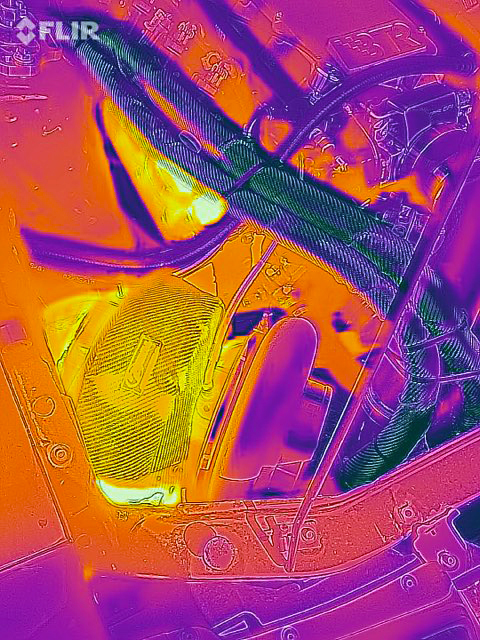
ABOVE: With the Lava Turbo Heat Shield installed, the thermal camera shows the shield’s outer surface. It cannot show the turbine housing beneath the insulation. This image documents the shielded setup, but it does not directly measure retained exhaust energy or changes in spool time.
Exhaust Insulation Benefits Around the Turbine Housing
A Lava Turbo Heat Shield insulates the turbine housing to reduce heat escaping into the engine compartment. Choose the correct fit for your turbo and follow the product’s installation instructions.
Managing Heat Around the Downpipe
Exhaust insulation benefits also extend to the downpipe and nearby components. Lava Exhaust Wrap or Heatshield Armor can help reduce radiant heat reaching the floor, hoses and wiring. Insulation downstream of the turbine manages heat after the exhaust has passed through the turbo. Its performance effects depend on the complete exhaust system.
Exhaust Scavenging in Naturally Aspirated and Supercharged Engines
Exhaust scavenging helps clear residual combustion gases from a cylinder so it can accept a fresh intake charge. Effective scavenging depends on exhaust flow and pressure waves arriving at the right time.
Header length, pipe diameter, collector design and valve timing all influence this process. Retaining heat affects gas conditions, but insulation alone does not guarantee better scavenging or more horsepower.
For naturally aspirated and supercharged engines, exhaust insulation also helps limit radiant heat reaching surrounding components. Choose insulation suited to the application and follow its temperature limits and installation requirements.