Lava Turbo Shield And Exhaust Wrap Install With Before/After Comparison
A turbo shield installation helps limit radiant heat from the turbine housing reaching nearby components. Combined with exhaust wrap, it also helps manage heat from the turbo feed pipe and downpipe.
In this article, we install Lava Turbo Shield and Lava Exhaust Wrap on Kyle Miller’s 2004 Mustang Mach 1. Follow the installation, then see our FLIR images and recorded insulation surface temperatures.
Benefits of Turbo System Insulation
- Retains heat within the turbine housing and exhaust piping
- Reduces radiant heat reaching nearby underhood components
- Helps protect heat-sensitive wiring, hoses and other components
- Helps manage heat in tightly packed engine compartments
These benefits matter in tight engine compartments, such as those in 1994–2004 SN95 and New Edge Mustangs. The modular V8 leaves limited space between the shock towers. Adding a turbo system brings more hot exhaust components close to surrounding parts.
We recently had a chance to work with Kyle Miller and his 2004 Mustang Mach 1 to insulate the turbo system after he installed a bigger turbo on the built 4V/DOHC 4.6 in the car. The goal is for the car to consistently be in the 8-second E/T (elapsed time) range while also being fully reliable for legitimate street driving. Part of this is insulating the new turbo system for the benefits listed above.
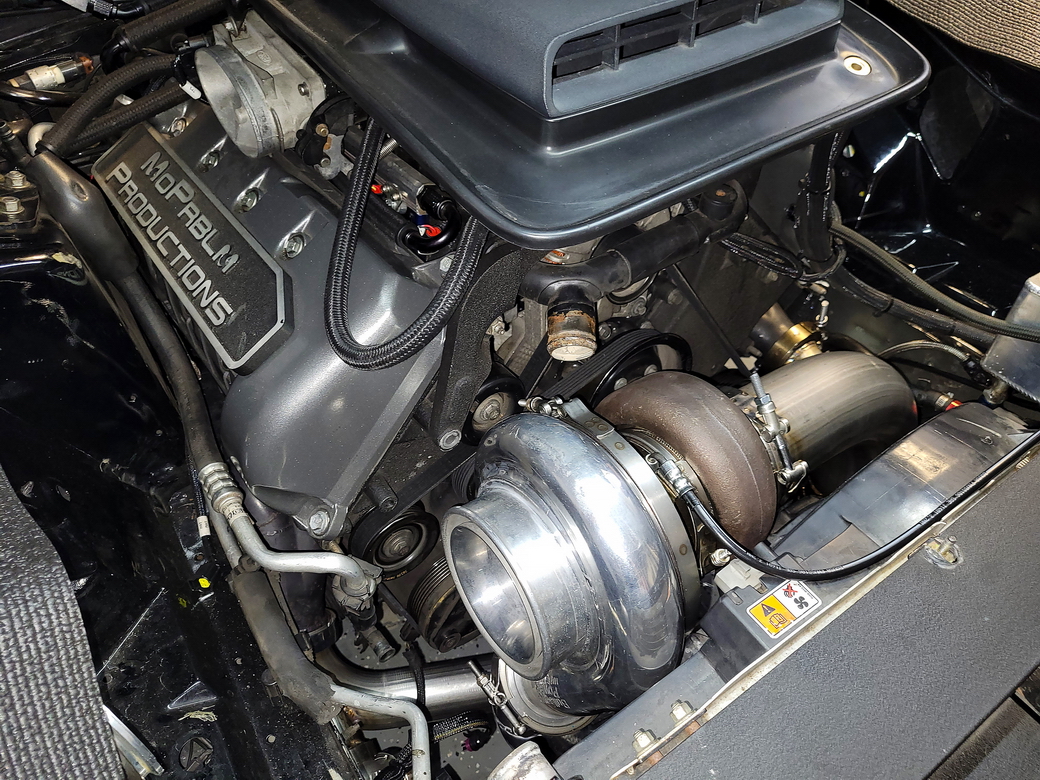
Turbo Shield Installation on a Mustang Mach 1
A turbocharger is a great way to increase horsepower and torque, but a turbo system adds a major radiant heat source to the engine compartment. With 1994-2004 SN95/New Edge Mustangs, the tight confines of the engine compartment (especially with a 2v or 4V modular V8 in place) make insulating the turbo exhaust piping and hot side of the turbo a necessity.
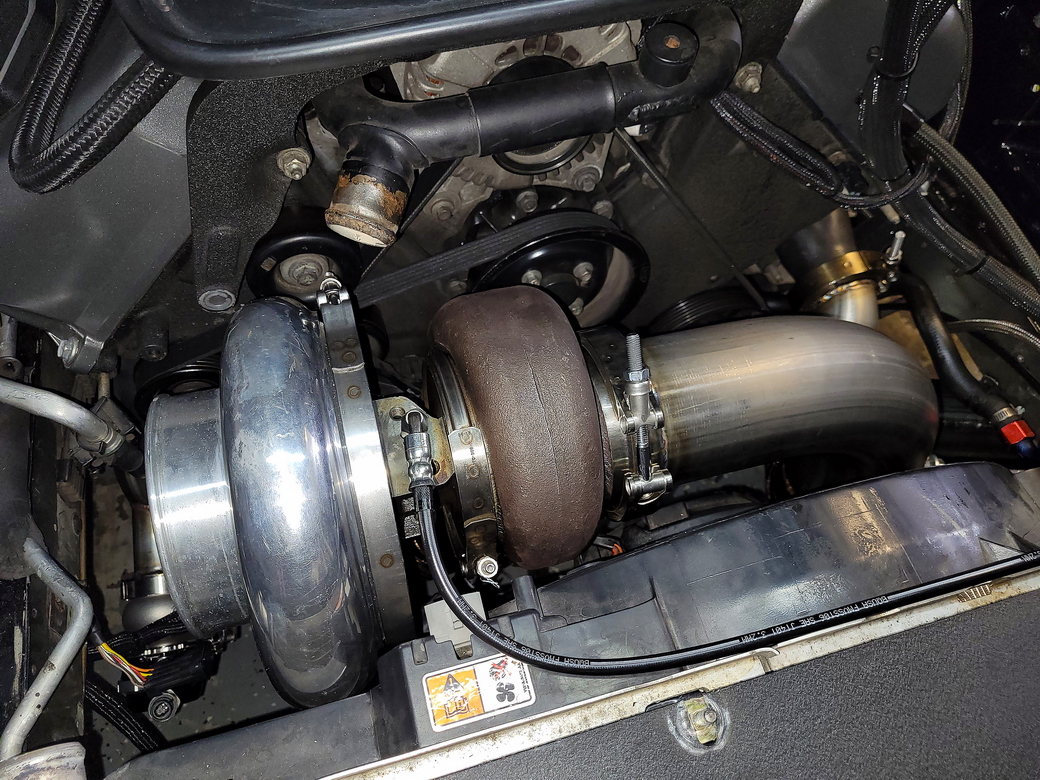
The turbocharger is a Bullseye 83/96 compressor with dual wastegates. Much larger than the previous turbo, this means even more heat underhood and with the front mount right by the radiator/fan assembly exposing a lot of components to this heat. There was already an issue with the old turbo downpipe where it had melted part of the radiator fan.
The feed pipe and downpipe fit tightly between nearby components. Both radiate heat when left uninsulated. Wrapping these pipes helps retain exhaust heat and reduce exposure to surrounding parts. This matters where hoses, wiring and cooling-system components sit close to the exhaust.
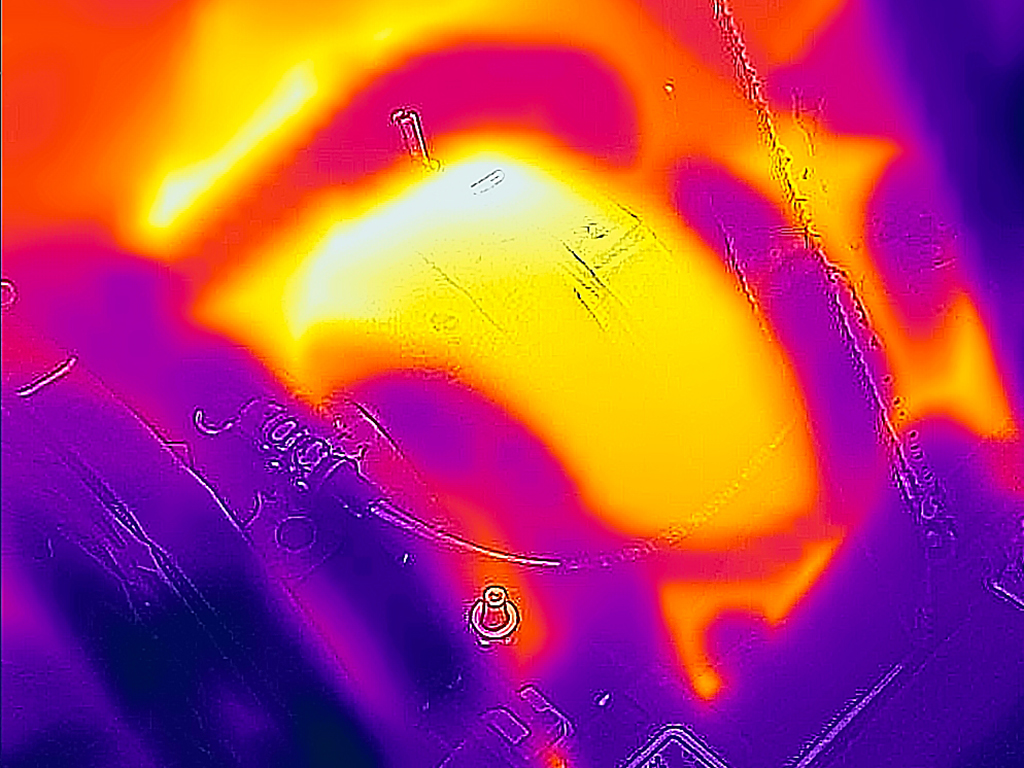
How hot does an unshielded turbo get underhood? Using the FLIR camera, this is the shot we took of the turbo after getting it up to temp. If you’re unfamiliar with FLIR (Forward Looking Infrared) imaging, the bright yellow/white areas are very high temperatures, while the purple/blue areas are lower temperatures.
 Follow along as we install a Lava Exhaust Wrap and Lava Turbo Shield to see the difference both make:
Wrapping the Turbo Feed Pipe
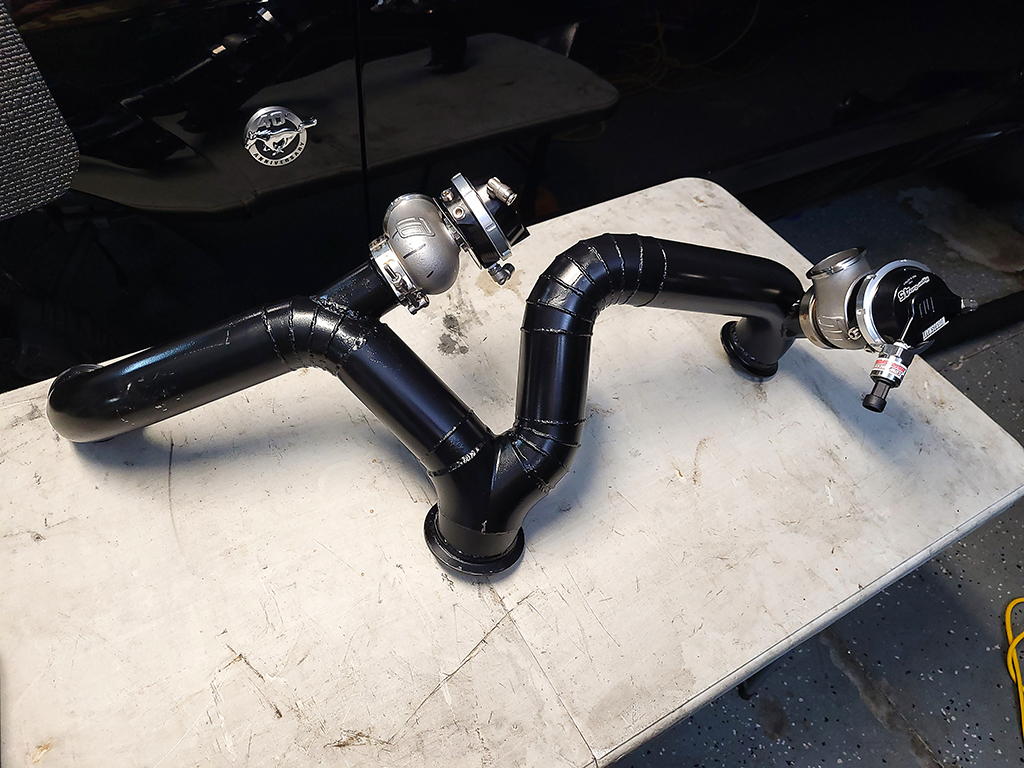
- Our first step was to wrap the feed pipe to the turbo with LavaTM Wrap exhaust wrap. The other option for insulating this pipe would be Heatshield ArmorTM exhaust insulation, except in this case we didn’t have enough room in a couple of areas to allow for enough airspace so the Armor could insulate properly.
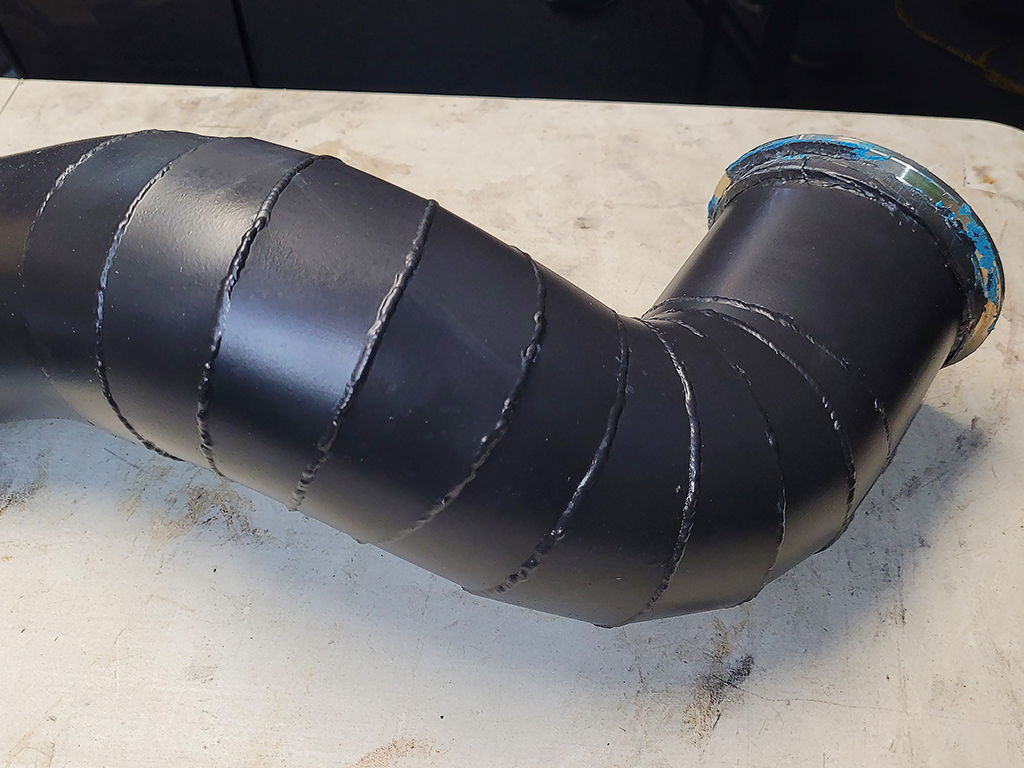
- The turbo’s pipe system was home-built by Kyle. To save money for use on other parts of the system, he built the bends in the pipe using pie-cut pieces. Functionally there is nothing wrong with this, but from an appearance standpoint some might find it less than attractive. Insulating the pipe with LavaTM Wrap will cover up the welds and have this pipe looking great.
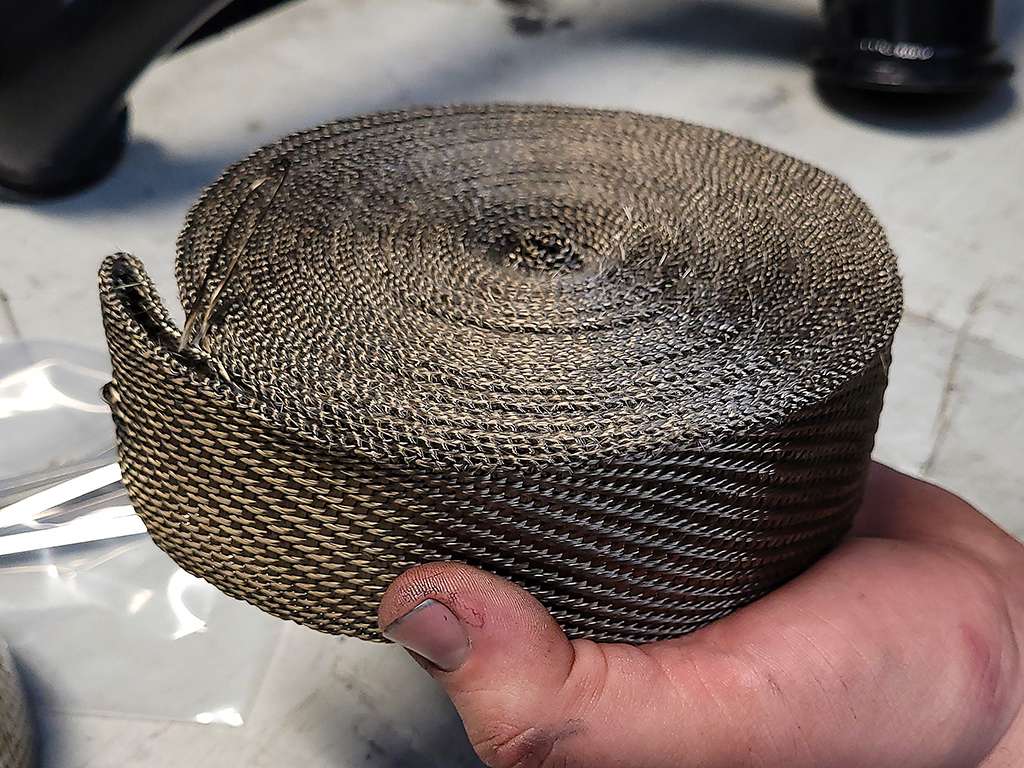
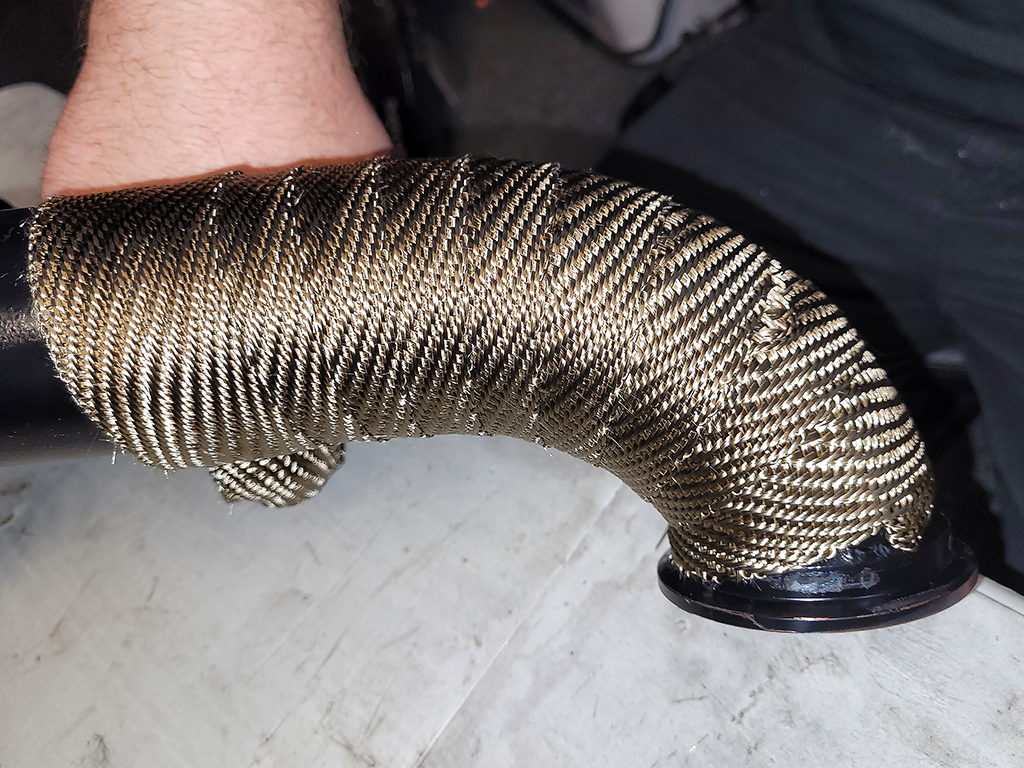
3.To insulate the turbo exhaust pipes we’re using LavaTM Exhaust Wrap. Made from Heatshield’s specially-formulated volcanic rock fiber material, Lava Wrap has a maximum sustained temperature rating of 1200 degrees F, with an intermittent max of 2000 degrees. You can handle it with bare hands without getting itchy like with fiberglass-based materials. Even after multiple heat cycles, the Lava Wrap will remain flexible so you can remove it and reinstall it if necessary. The Lava fibers are also naturally chemical and acid resistant.
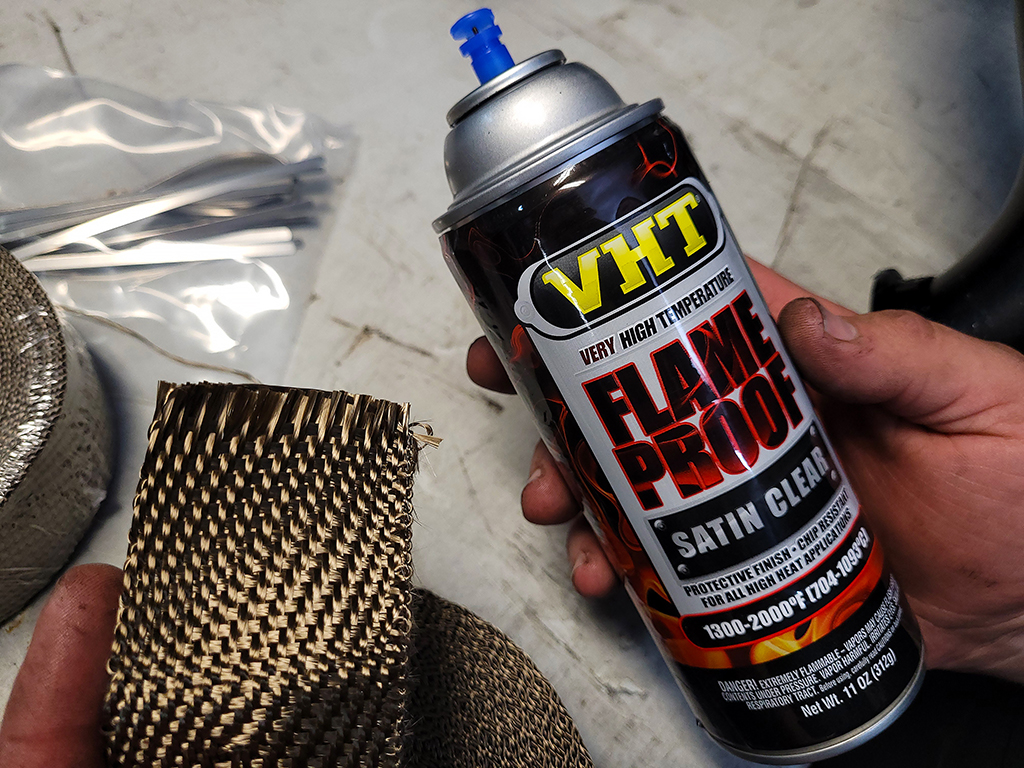
- To help prevent fraying, apply suitable high-temperature clear engine paint to the wrap before cutting. Check the paint manufacturer’s temperature rating and application instructions. Another option is to fold the cut end under before securing the wrap.
Securing the Exhaust Wrap
5. When installing exhaust wrap, you want about a quarter- to half-inch of overlap of each loop. This makes sure the wrap will function properly to insulate the pipe, and also keep it tight and in place so it doesn’t unwind on you.
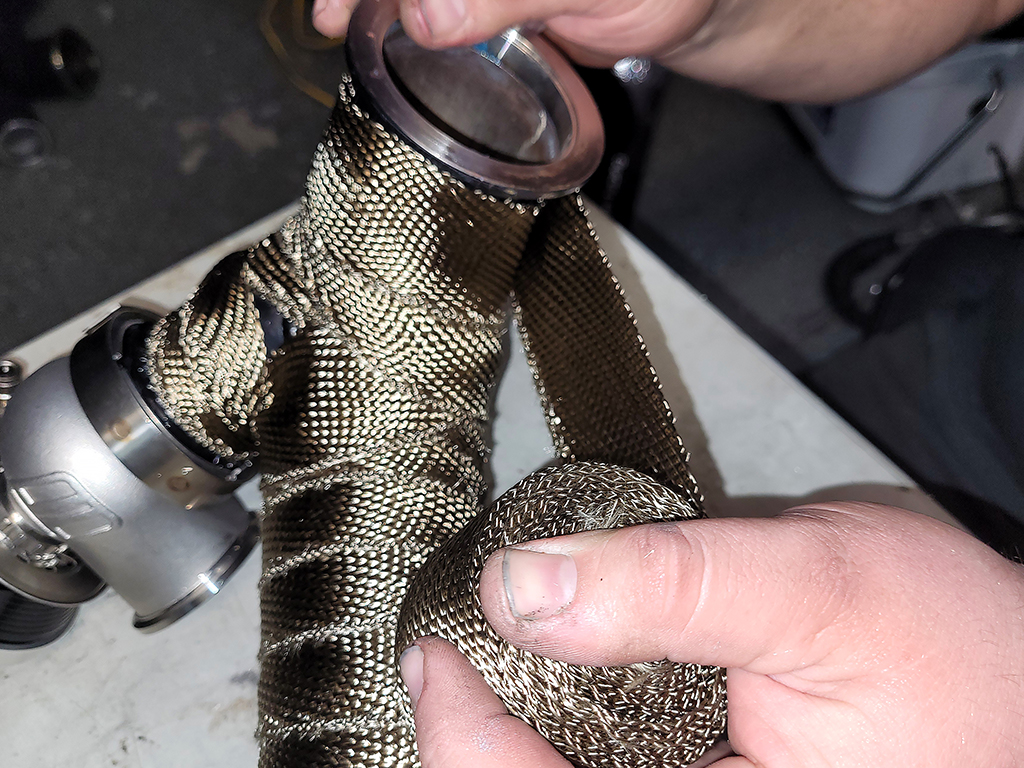
6.The LavaTM Exhaust Wrap Installation Kit comes with everything you need for setting up, including plenty of Heatshield Products HP Thermal-TiesTM. Made of high-temp stainless steel they can handle 1800 degrees F continuous heat. To tighten them, use a pair of needle-nose pliers to tighten the tie by grabbing hold of the end and turning it, similar to peeling back the lid on a can of anchovies.
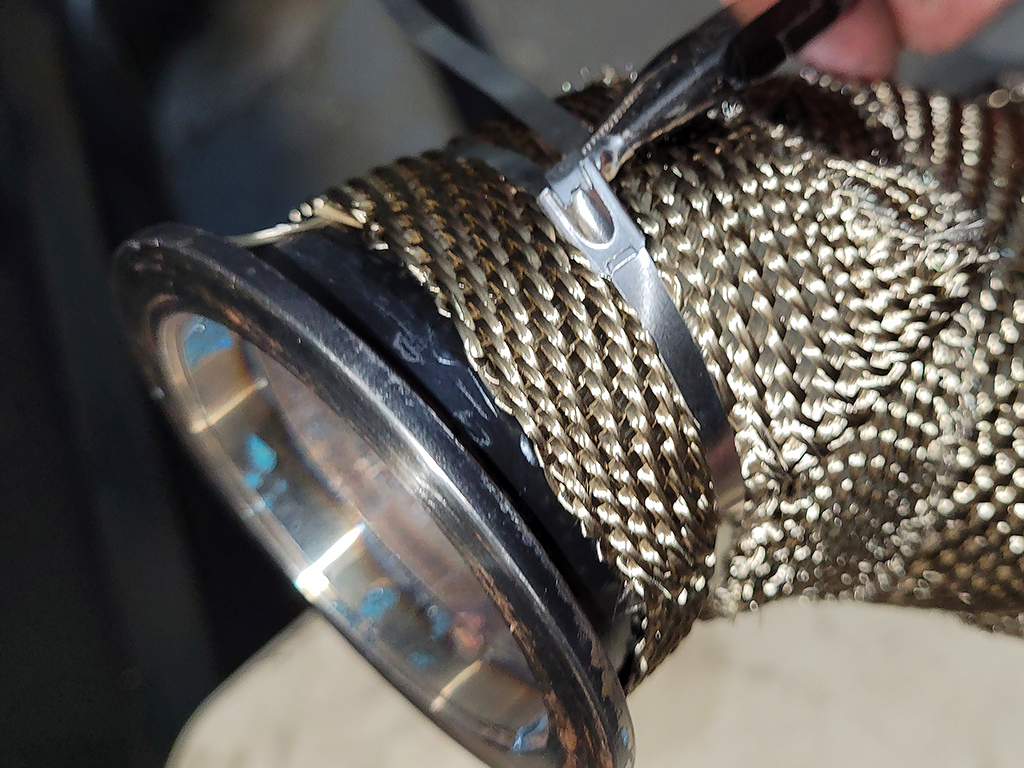
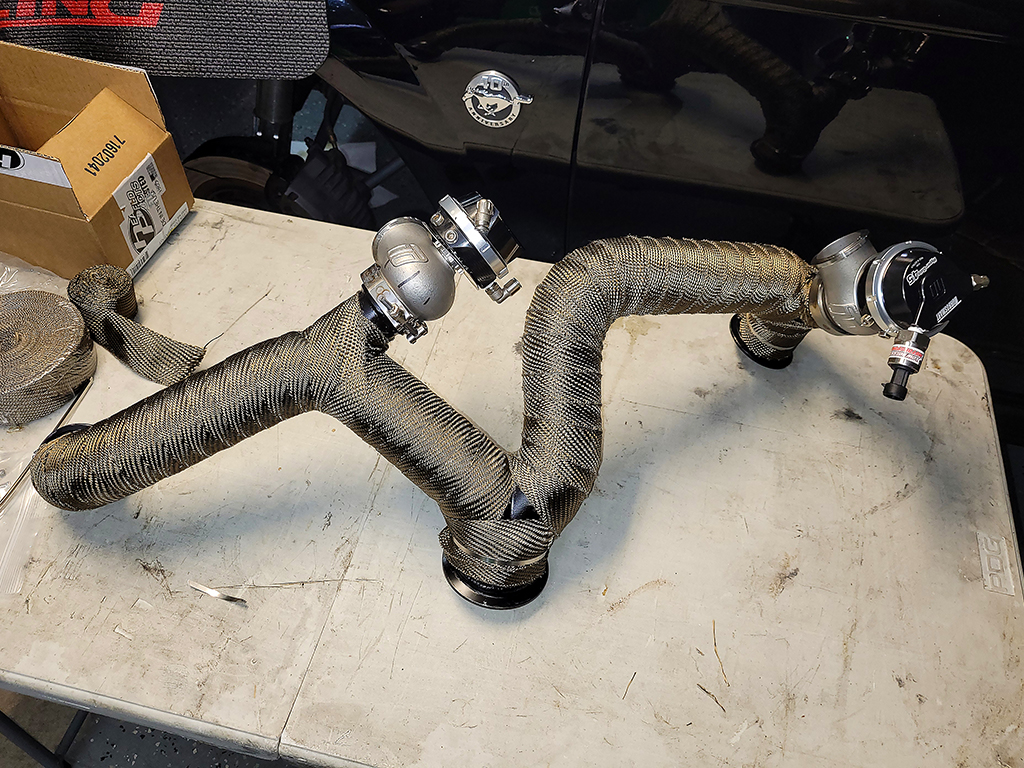
- Here’s the finished result. No welds to be seen, and the carbon fiber look of the LavaTM Wrap will look great under the hood. But there’s one last thing to do before we reinstall the feed pipe.
Protecting the Wastegates
- Shielding the waste gate(s) from heat is often overlooked but can provide multiple benefits. First, shielding the wastegate and its diaphragm from heat helps the gate operate more consistently. Second, it also reduces heat wear on the wastegate diaphragm which increases diaphragm life and reduces the risk of premature failure.
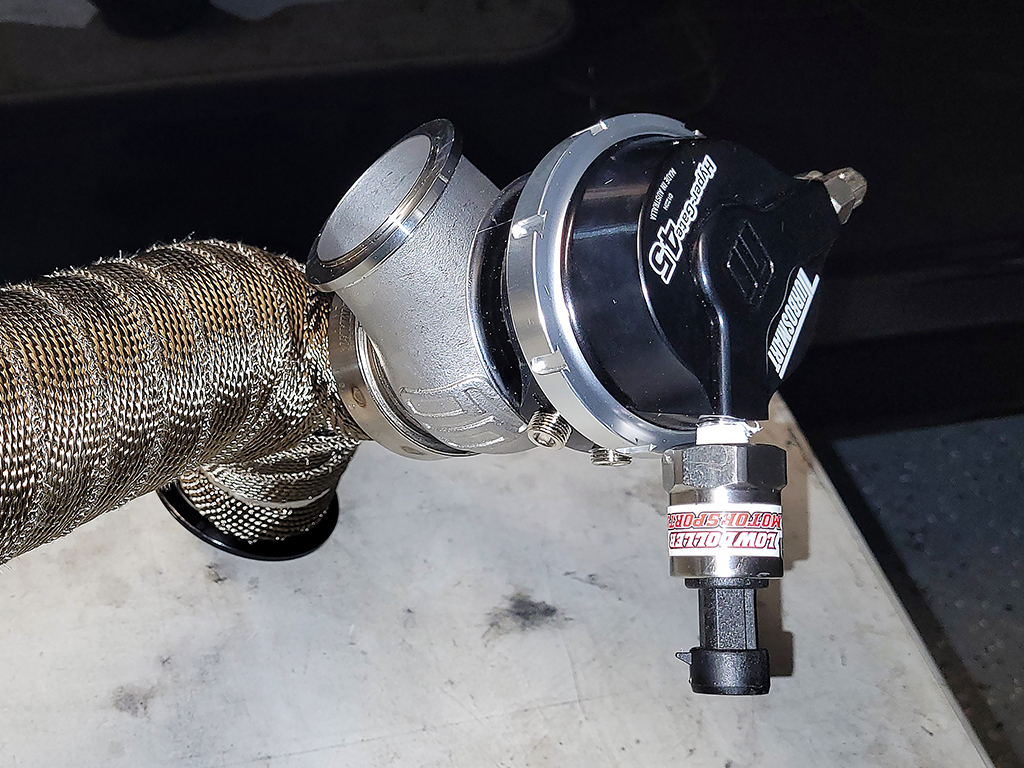
- LavaTM Wastegate Insulating Shield is made from the same specially-formulated volcanic rock fibers as LavaTM Wrap and LavaTM Turbo Shield. It’s easy to install and can be removed if necessary for turbo system maintenance. You can also see the Heatshield Products logo with the Made in USA flag. If you buy something that says its Heatshield Products but you don’t see an American flag on the part or in/on the package, then it’s not a genuine Heatshield Products item.
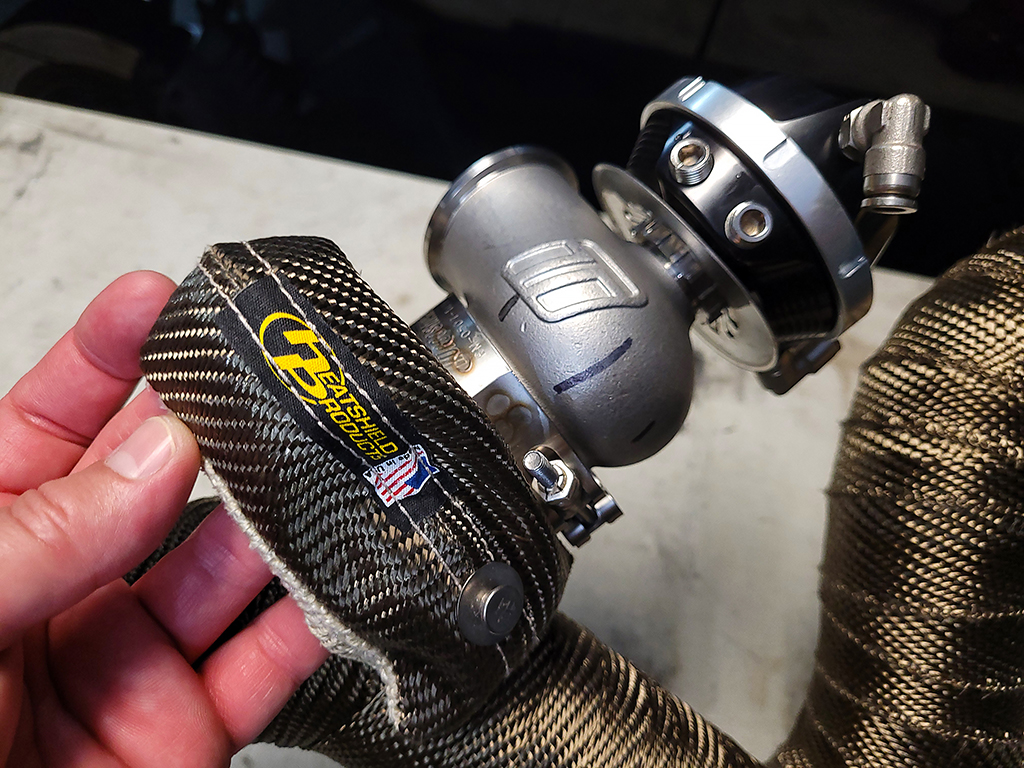
10. LavaTM Wastegate Shield comes with Heatshield Products Power Anchor fastening system already installed. Power Anchors make installation and getting a tight fit much easier than a standard hook. They also allow for easier removal if necessary.
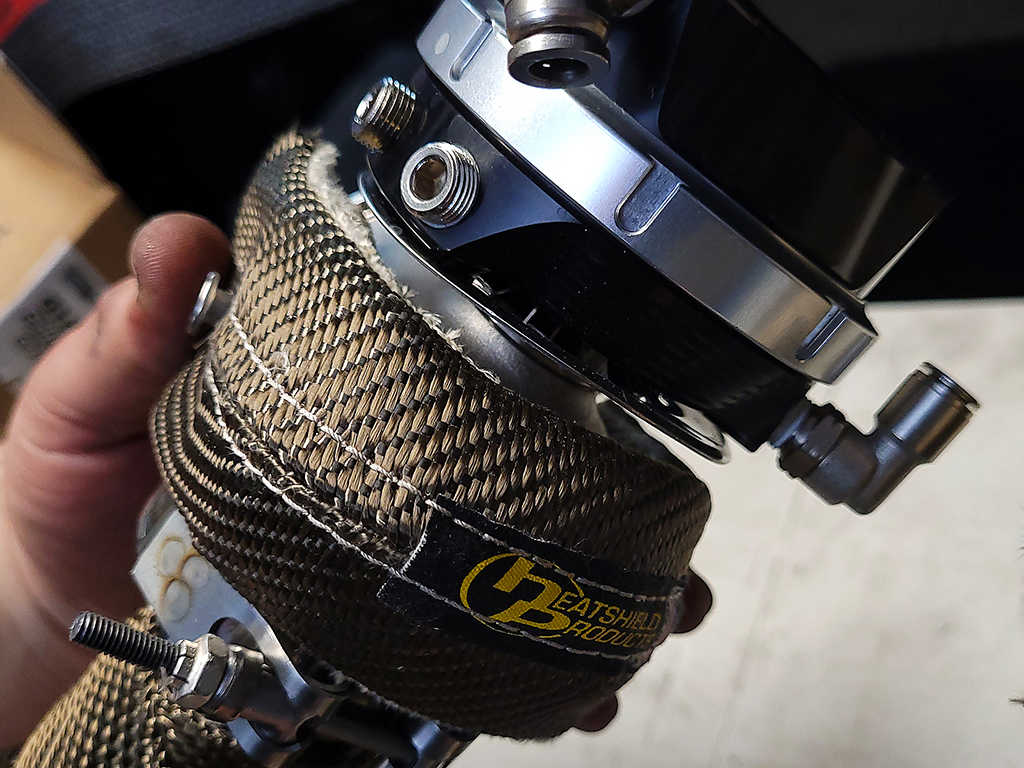
- Almost looks too good to hide under a hood! With everything wrapped and insulated, the feed pipe is ready to be installed.
Fitting the Lava Turbo Shield
- LavaTM Turbo Shield is Made in America from specially-formulated volcanic rock fibers. Multiple direct-fit sizes are available along with made-to-order shields if needed. It uses internal hems for a cleaner look and additional strength so Lava Turbo Shield won’t come apart after countless heat cycles. Internal hems also make for a better, tighter fit for more efficient insulating. Lava Turbo Shield is rated for 1800 degrees F continuous heat and up to 2200 degrees intermittent heat.
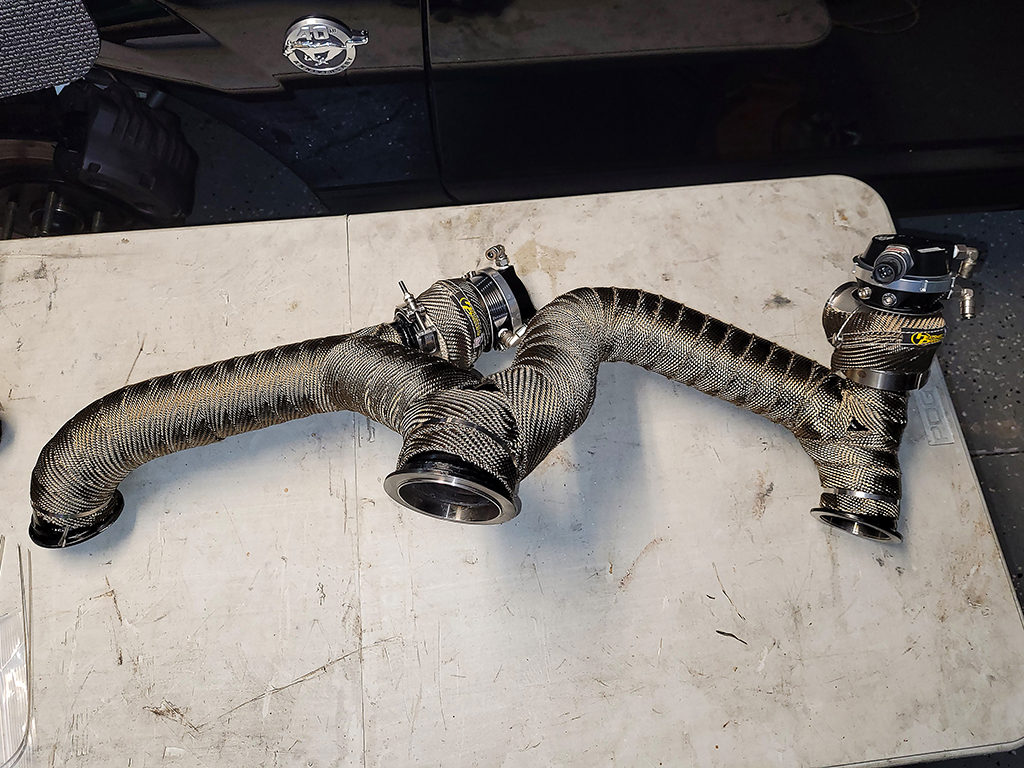
- For securing LavaTM Turbo Shield on the turbo housing, HP Power AnchorsTM are built in to make installation (and removal) a piece of cake. A pair of HP SpringsTM made from 302 stainless steel are included to fasten the ends closed.
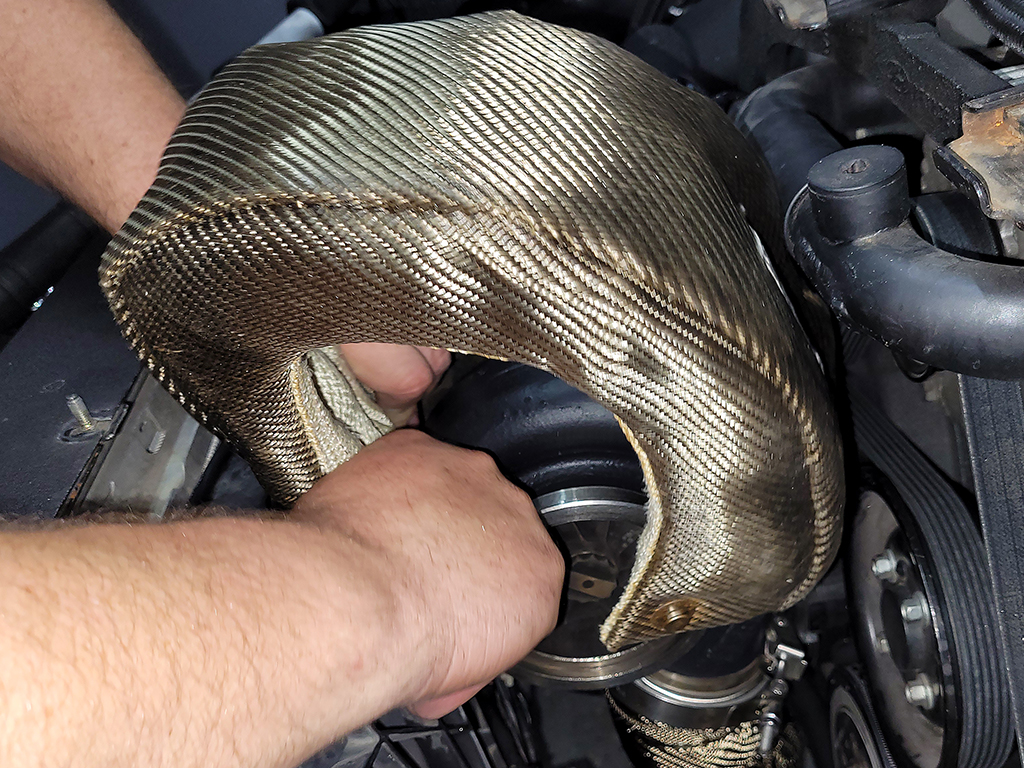
- Another area where LavaTM Turbo Shield is superior to cheaper, lower quality turbo shields is fitment around the exhaust flange. Cheap turbo shields will often overlap the flange and require being forced back for the V-band clamp to install properly. It can also cause problems when removal is necessary. With Lava Turbo Shield you don’t have that problem,
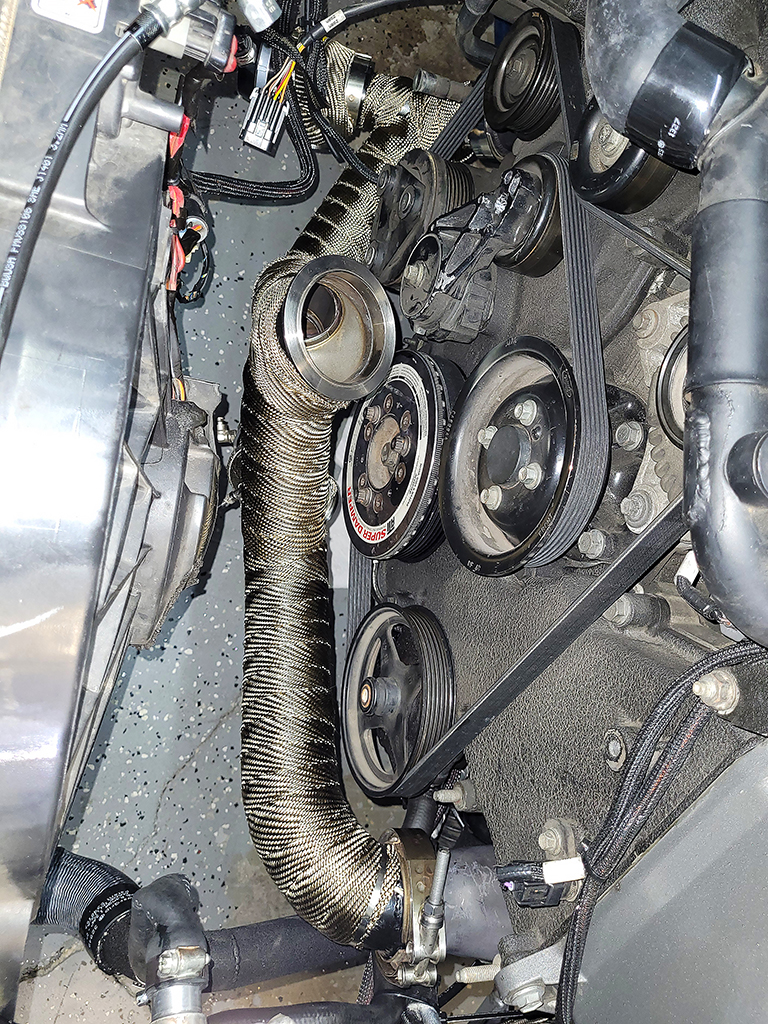
- The wrapped feed pipe and downpipe are back in place between the engine and radiator/fan assembly. The insulation helps reduce radiant heat reaching nearby cooling-system components.
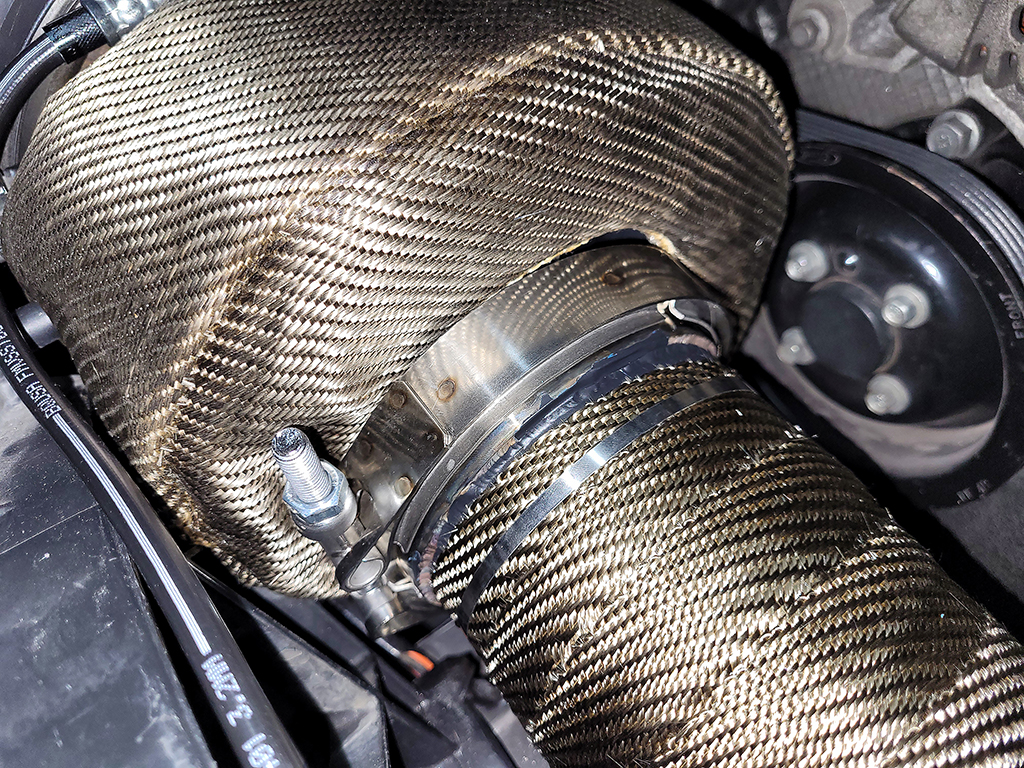
Turbo Shield Installation Results
- After reinstalling everything, we started the Mustang and checked the system with the FLIR camera. The image shows the outside of the Lava Turbo Shield, with fewer bright areas than the earlier view of the exposed housing. It does not show the turbine housing temperature beneath the insulation.
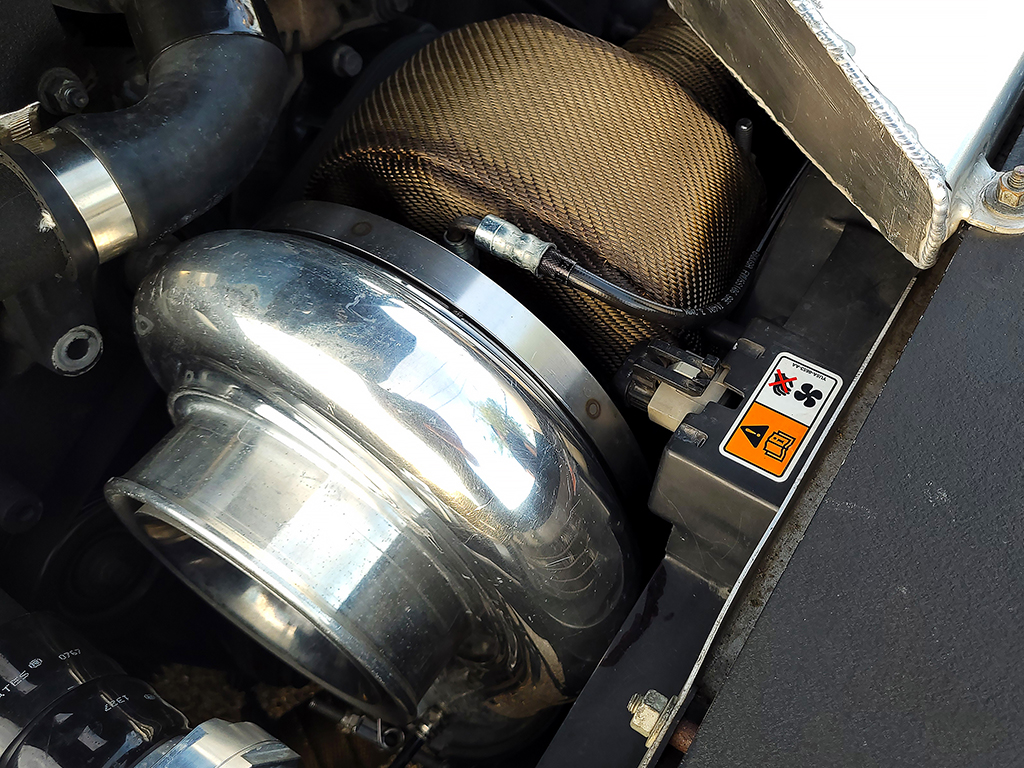
- Here’s how things look now with the LavaTM Turbo Shield installed and not a big snail shell of cast iron next to the shiny compressor housing.
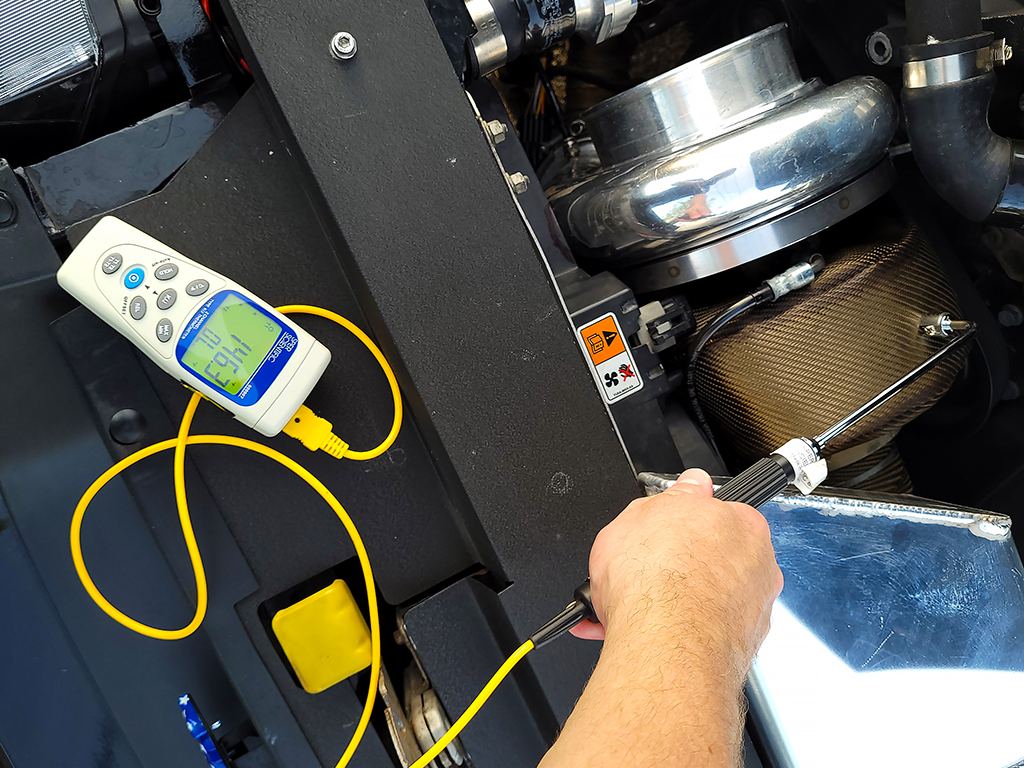
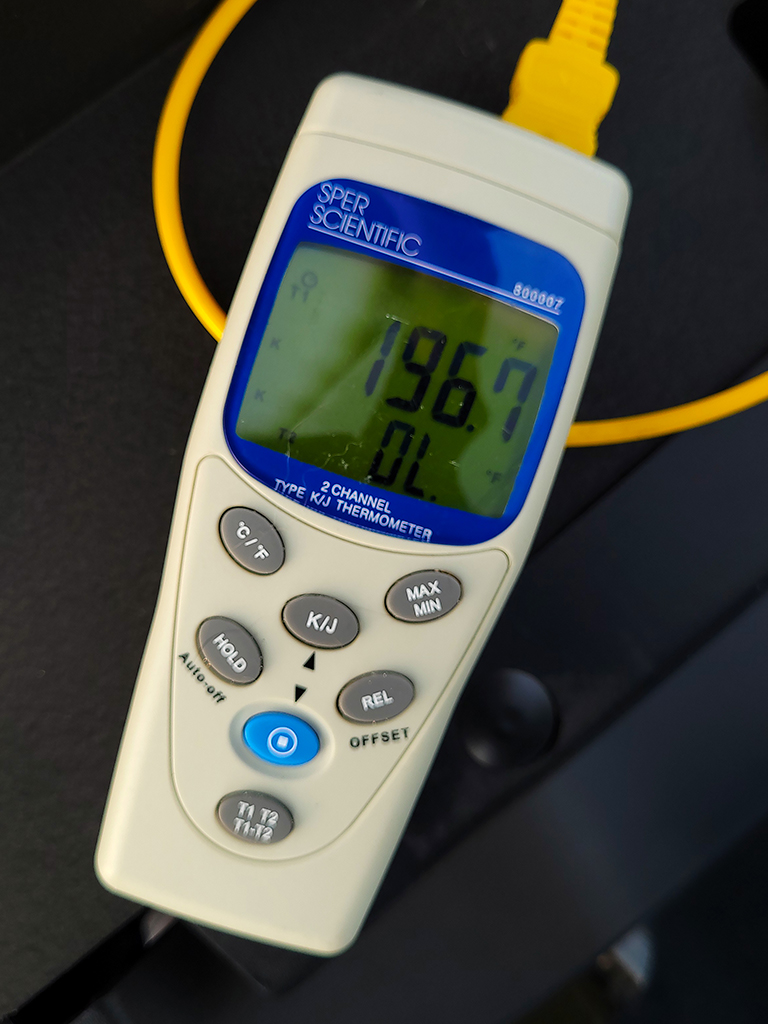
- We also checked the outer surface of the Lava Turbo Shield with a contact temperature probe and an infrared thermometer.
- The contact probe recorded 196.7°F on the turbo shield’s outer surface during this demonstration.
- The infrared thermometer recorded 149°F on the turbo shield’s exterior. This was a separate reading using a different measurement method.
- With the previous setup, the down pipe was so close to the plastic shroud of the factory electric fan it melted part of the shroud. The excessive radiant heat also killed the electric fan motor and necessitated its replacement. Lava Wrap helps reduce radiant heat reaching the fan assembly.
Comparing Wrapped Pipes and Bare Headers
- We left the shorty headers on the engine uninsulated deliberately. One, we wanted to know the difference between the insulated turbo pipe system and the headers. Two, we’ll be doing a separate before/after test using Header ArmorTM to show benefits of insulating your exhaust headers, and also how Header Armor is ideal in situations like our subject Mustang where space is tight and removal of the headers for installation is not desired unless absolutely necessary. The white-hot area in the image is the driver’s side header.
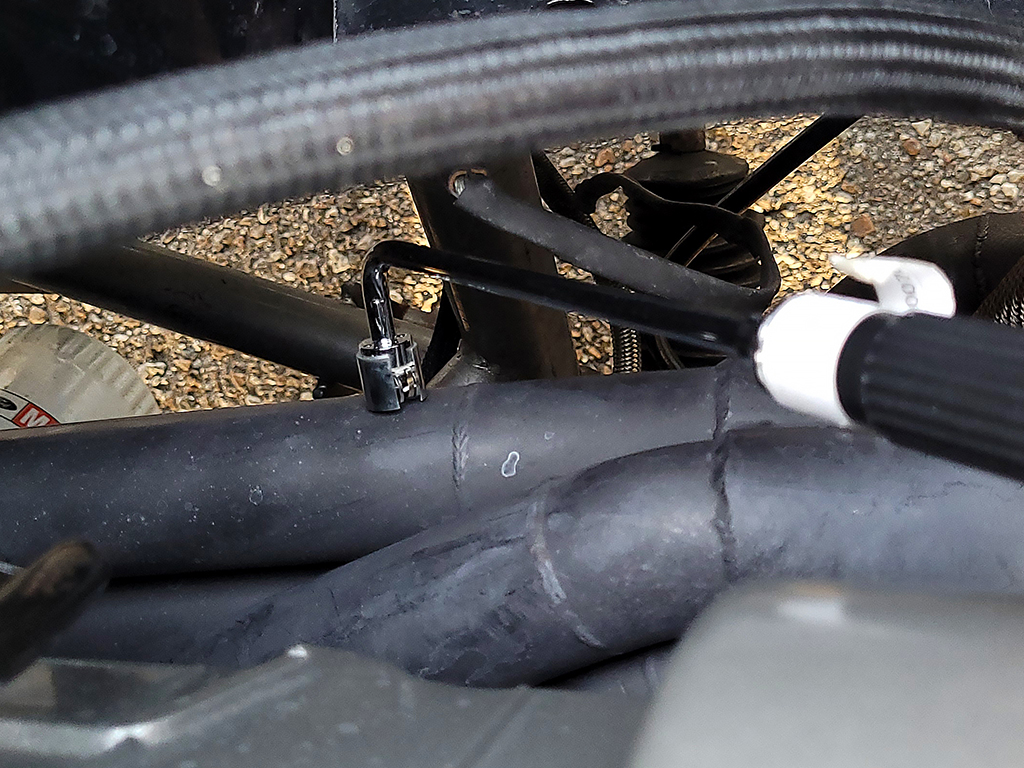
- For further comparison between insulated and uninsulated, we checked the temperature of the wrapped turbo feed pipe just after the exhaust header.
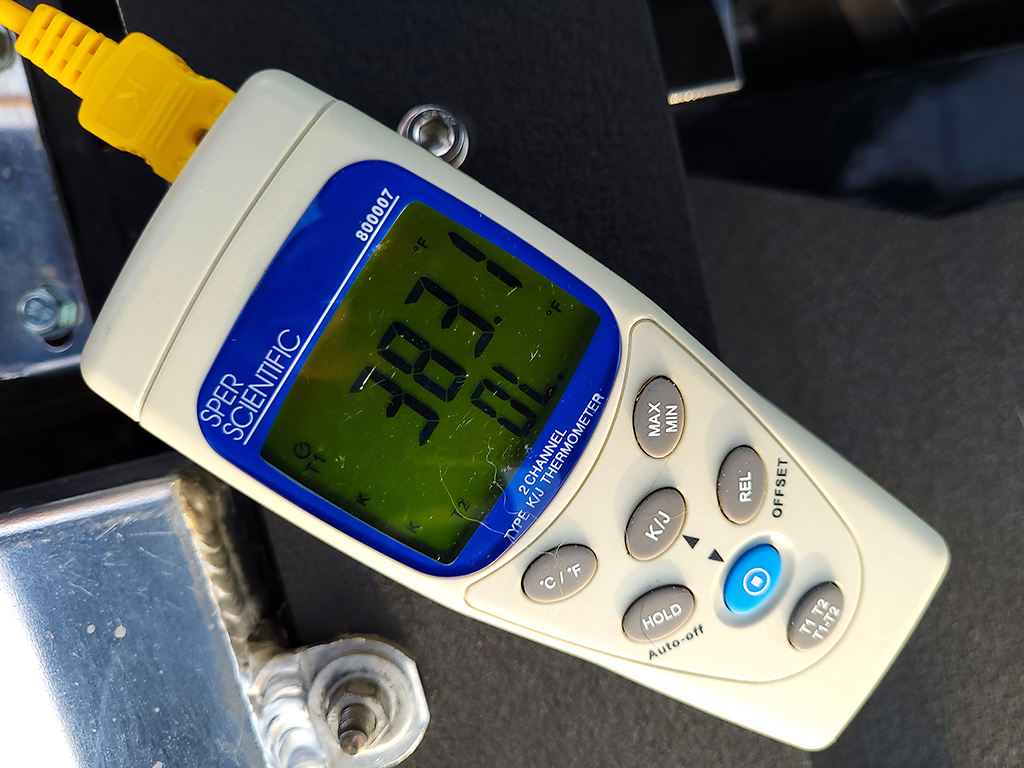
- The contact probe recorded 209.8°F on the outside of the wrapped turbo feed pipe.
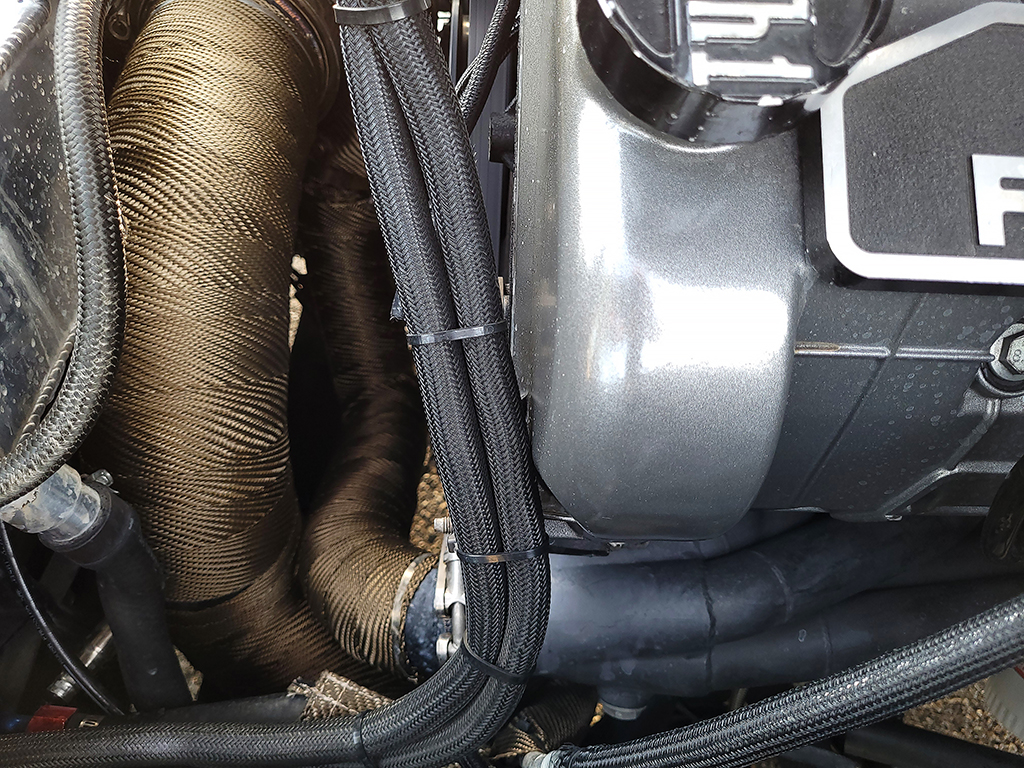
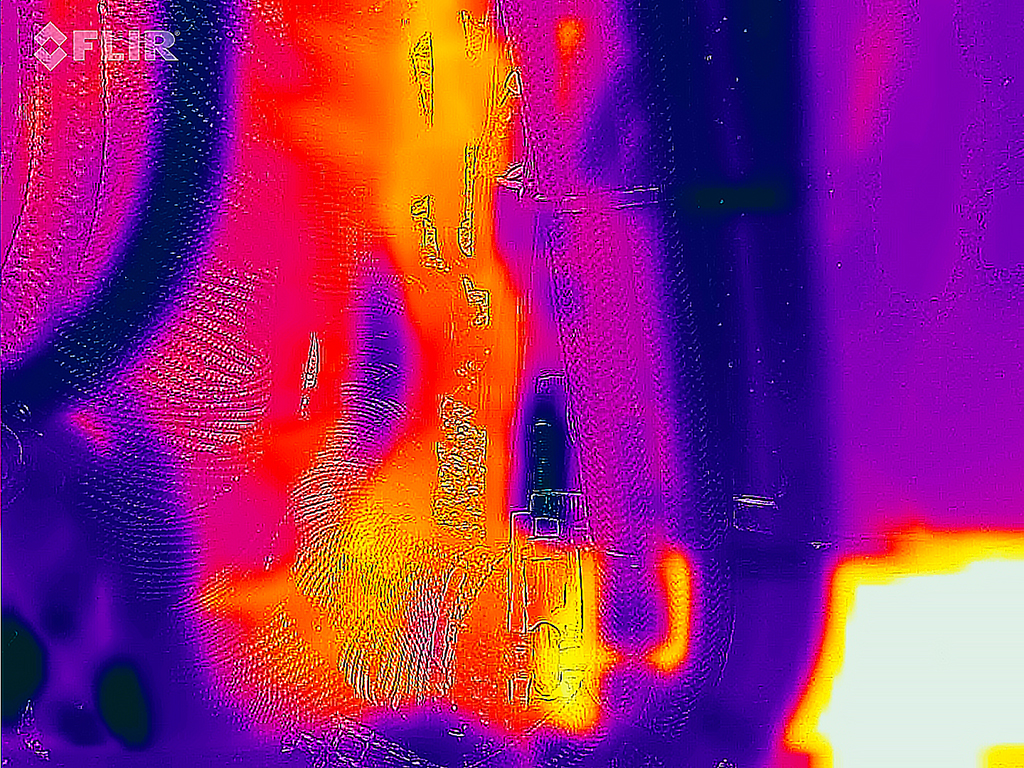
- In the two photos you can see how things look to the normal eye, and how they look to the FLIR camera. FLIR really illustrates the difference between the insulated turbo feed and down pipes versus the uninsulated exhaust header.
Planning your own turbo shield installation? Start by identifying the turbine housing size, pipe dimensions and available clearance. Explore Lava Turbo Shield, Lava Exhaust Wrap and Lava Wastegate Shield to find products suited to your setup. Follow the installation instructions for each product.