
Demonstrating the Heat Resistant Power of the HP Torch Blanket
The HP Torch Blanket helps protect components from heat and sparks during welding, cutting, or grinding. It’s especially useful when you work near sensitive components or finished surfaces. Just a few sparks or seconds of extreme heat can cause expensive damage. The blanket helps reduce that risk. But it also has uses beyond welding spark protection.
Because HP Torch Blanket is extremely flame/spark resistant while being able to withstand 1800-degrees F continuous direct-contact heat, it is also ideal to use when you have to work around hot components that could easily burn your skin, clothing or damage tools and accessories. Some examples of situations are working around hot exhaust pipes or manifolds, hot engines, hot surfaces (like metal surfaces heated by the sun), and so on. You can easily carry the blanket in your off-road rig or race-day kit. Keep it handy for emergency repairs around hot components.
Can a Welding Blanket Burn?
It’s important to note that while the HP Torch Blanket is a fire-resistant blanket for welding, it is only intended to provide partial protection during light-duty welding and grinding jobs. Like other torch welding blankets, exposure to or direct contact with extreme temperatures may result in smoking or fire.
HP Torch Blanket Heat Demonstration
In order to illustrate how useful the HP Torch Blanket can be and what it can withstand, we got out the FLIR camera and MAP gas torch to perform a little demonstration:
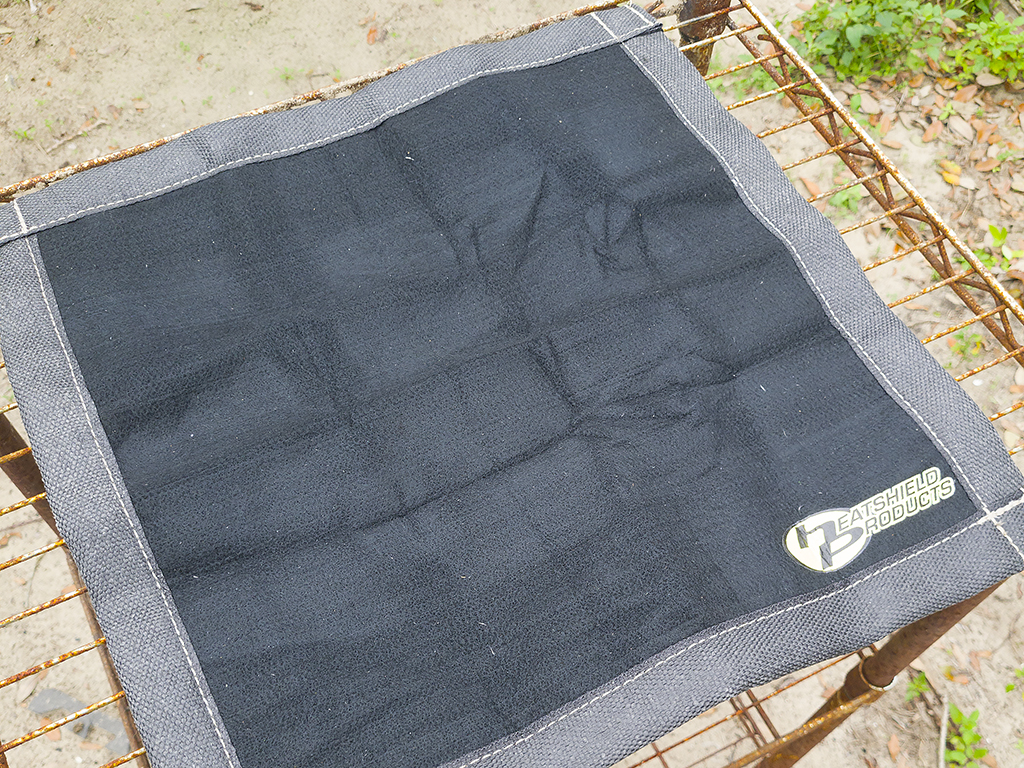
ABOVE: HP Torch Blanket is made from Heatshield Products Stealth Shield insulation and thermal barrier material. It feels a lot like felt cloth but is made of special fibers that can withstand up to 1800 degrees F of constant, direct-contact heat, making it highly flame resistant and capable of providing welding spark protection. It’s available with mounting grommets or built-in magnets and a version with a built-in keyhole-style opening to allow for placement over an object needing welding/grinding. You still need to protect the immediate surrounding area.
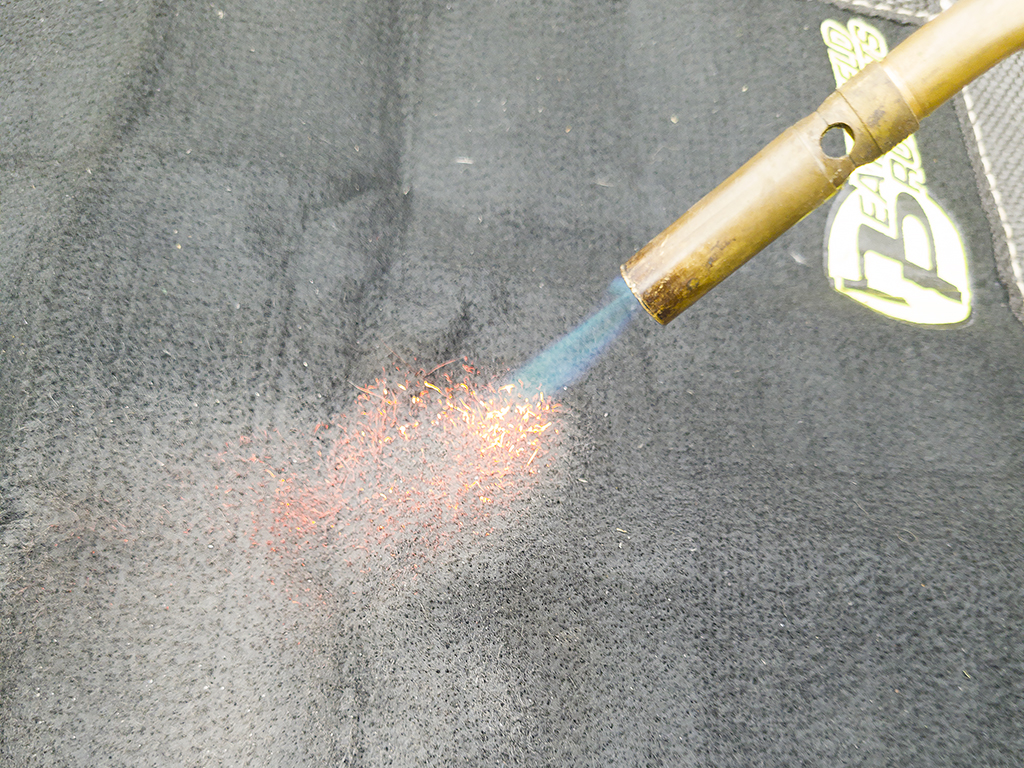
ABOVE: We used a MAP gas torch to show how HP Torch Blanket is flame resistant. You can see the fibers turning red from the torch, but no signs of flame or even being close to ignition.
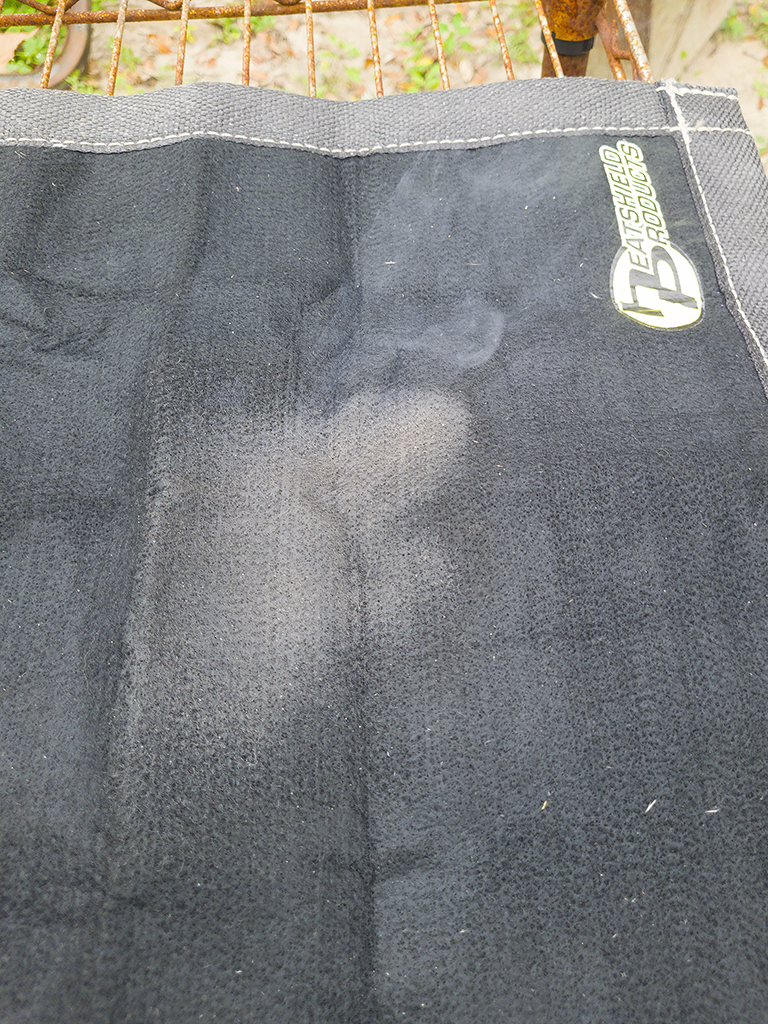
ABOVE: We applied the torch to the material for close to 30 seconds. Only a slight wisp of smoke and some discoloration appeared where the flame hit. The material remained soft and flexible after the demonstration.
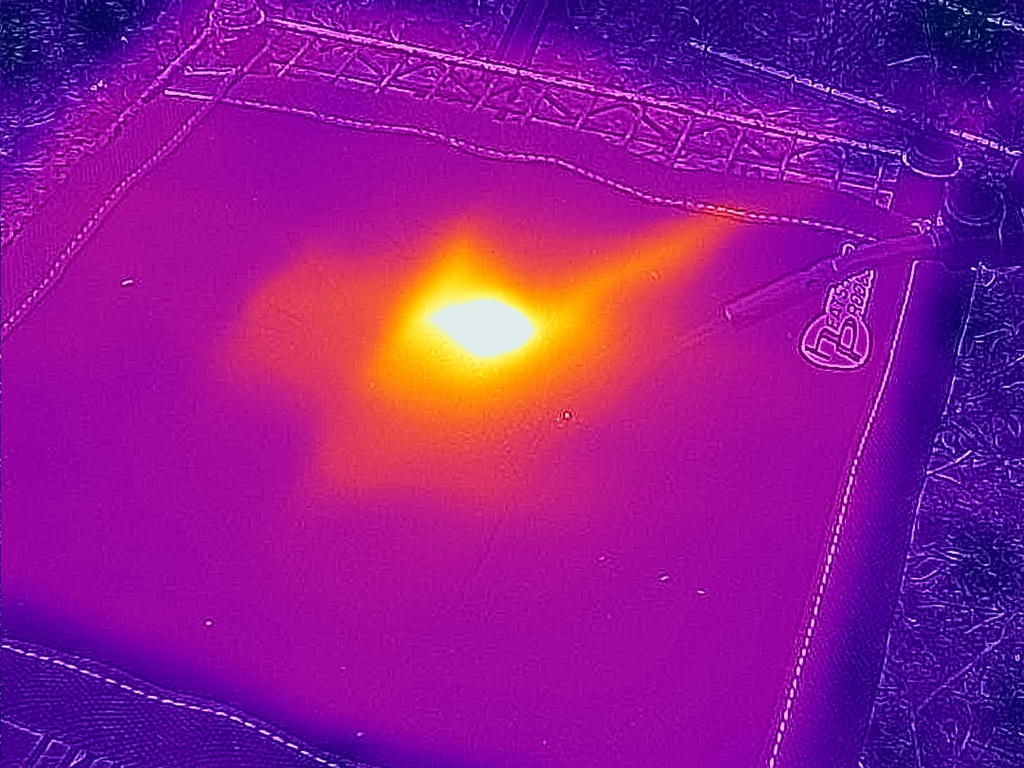
ABOVE: Using the FLIR camera, you can see the visual effect of the MAP gas torch flame hitting the torch welding blanket, plus how hot it got.
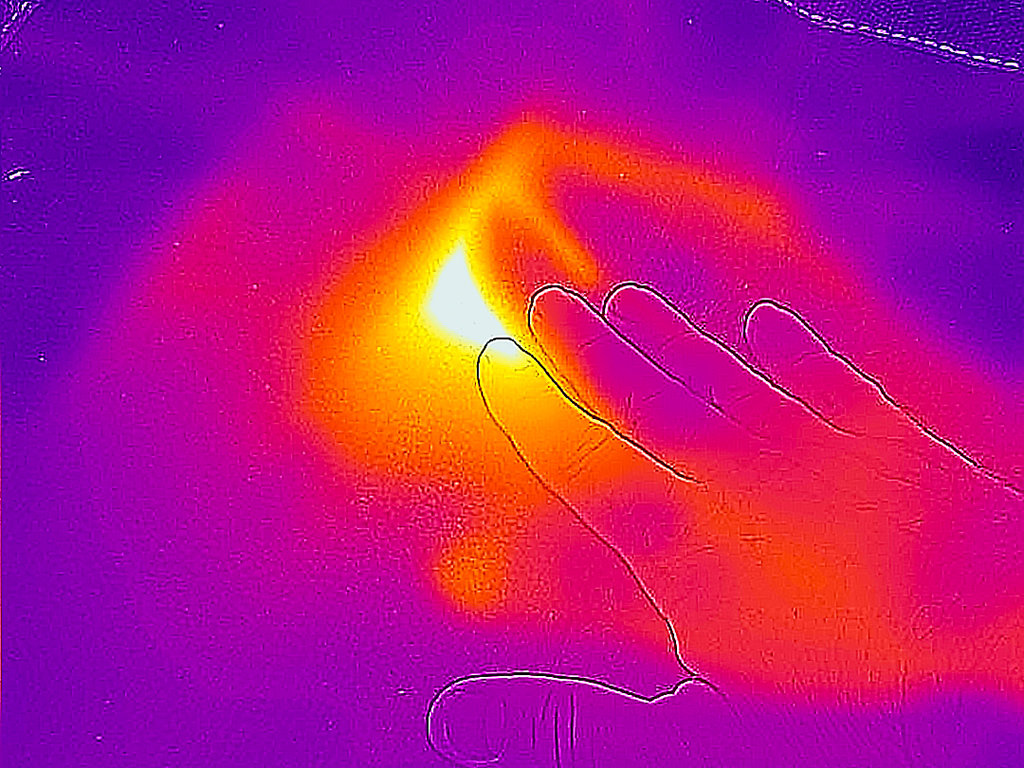
ABOVE: After removing the torch, we checked the blanket’s back side with the FLIR camera. This image documents the surface temperature during our demonstration. Results depend on the heat source, exposure time, and conditions.
Using the Blanket Around Hot Exhaust Components
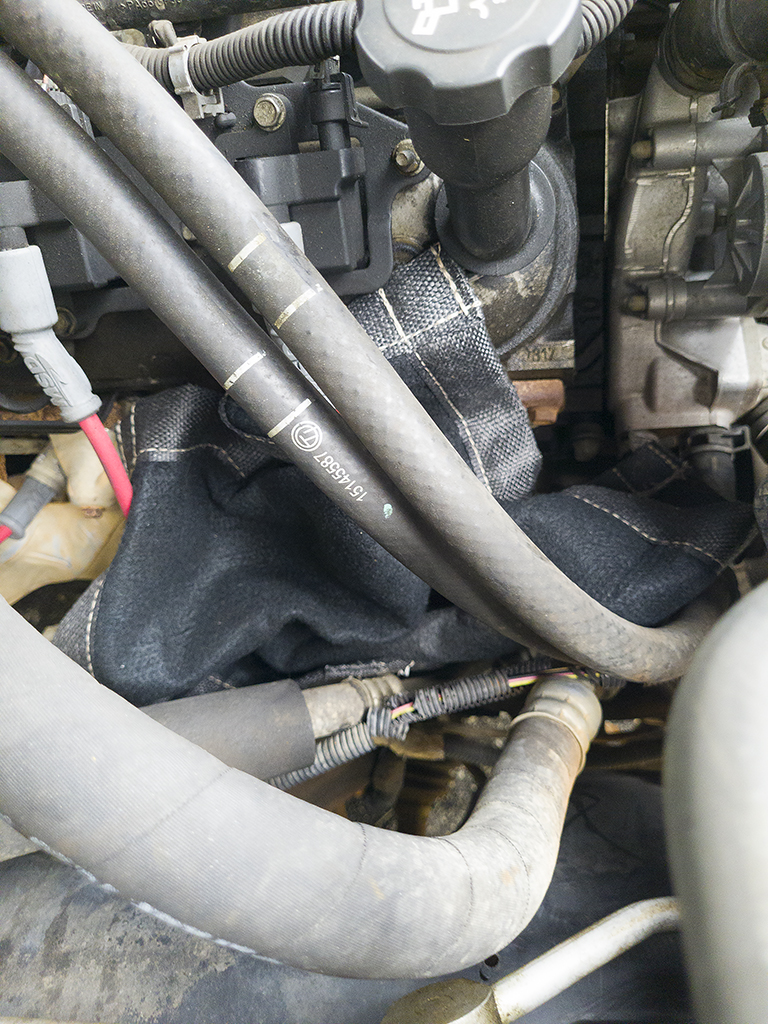
ABOVE: One of the great bonus uses for the HP Torch Blanket is to cover dangerously hot surfaces or components you’re working near. For example, we put Torch Blanket over a hot iron exhaust manifold. It’s also great with racecar applications where you must work near scorching hot exhaust headers.

ABOVE: The FLIR image shows the blanket’s outer surface and the surrounding components. The dark area represents the blanket’s cooler outer surface in this demonstration. The camera does not show the manifold temperature beneath the blanket.
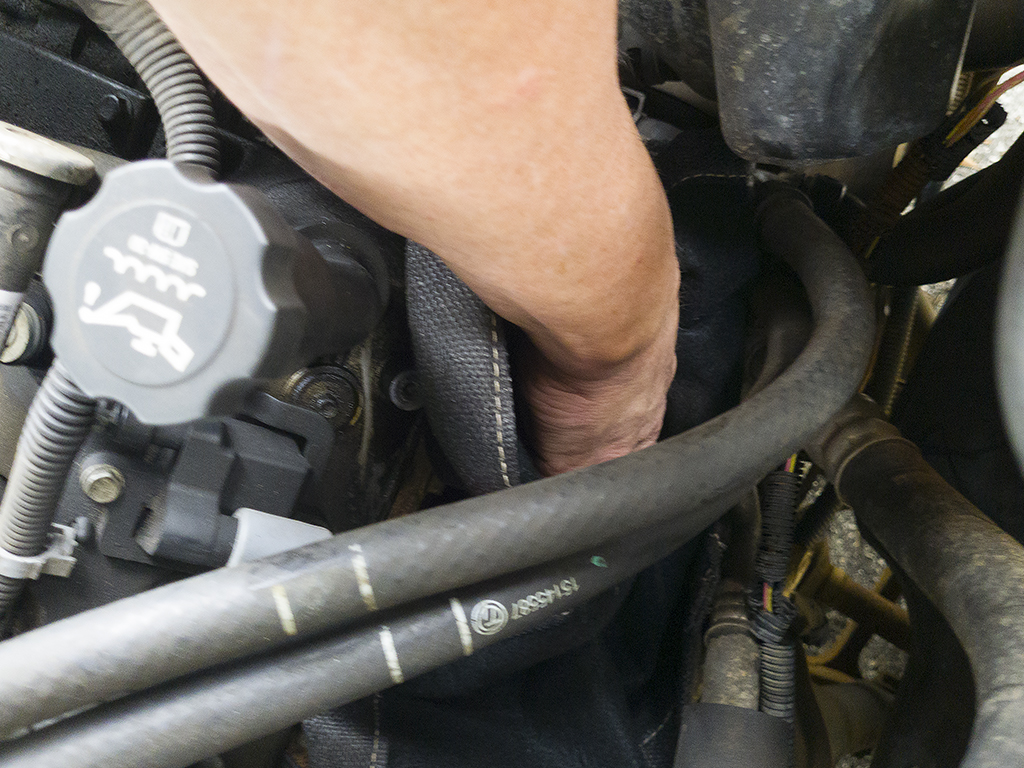
ABOVE: Here, we demonstrate the blanket covering the hot exhaust manifold. Beyond car welding, the blanket can be a useful addition to a race kit or off-road rig. It helps shield nearby surfaces during repairs around hot components. Allow components to cool whenever possible, and use appropriate protective equipment.